
Cleaning up twigs, sticks, and branches knocked free from trees and shrubs by heavy snows and intense summer storms can be a hassle, but there are plenty of ways to put fallen sticks to good use and make garden cleanup easier. From crafting to composting, here are 18 ways to deal with fallen twigs and branches that can save you money, inspire creativity, and enhance your garden.
1. Rake often.
Rather than doing a big garden cleanup all at once, dedicate a few minutes every week to raking or picking up sticks that fall into your yard. This makes garden maintenance easier, and prevents sticks from piling up and smothering your plants and grass.
2. Use a tarp.
Small sticks can easily fall through your fingers if you try to carry a bunch of plant debris to your compost pile in one go. Make your task easier by bundling up those woody bits on top of a tarp and dragging the whole tarp—sticks and all—where it needs to go.
3. Keep sticks tidy.
One of the easiest ways to dispose of lots of branches and sticks is to create a simple brush pile in an out-of-the-way corner of your yard. However, brush piles can get messy if you heap the sticks haphazardly. To prevent tangled twigs, place sticks and branches in brush piles so they’re all pointing in the same direction. Consider making separate piles for large branches and small twigs so you can quickly gather the stick size you need for other projects.
4. Fuel a campfire.
Some gardeners dispose of woody plant debris by burning it in a roaring bonfire at the end of the season, but you can also burn most woody plant bits in a fireplace or a fire pit to get rid of garden waste and keep yourself cozy at the same time. Don’t forget to save a stick or two for roasting marshmallows.
5. Try composting.
If you have a compost bin, add sticks, twigs, and chopped-up branches to the composter as carbon-rich materials. Remember to add some nitrogen-rich items, like kitchen scraps, to your composter at the same time. Too much carbon in a compost pile slows down the composting process.
6. Cover muddy spots.
Muddy sections of gardens and lawns can cause a mess during the spring rainy season. Correcting drainage issues and building sturdy walkways is a more permanent solution, but you can use sticks and twigs to temporarily cover these messy spots so your feet don’t get muddy every spring.
7. Create biochar.
Biochar is a charcoal-like soil additive made by burning organic matter in a low-oxygen environment. When mixed into gardens, biochar can improve drainage issues, aerate compact soils, and hold onto soil nutrients so they’re less likely to leach away. Best of all, you can make biochar at home with the sticks and twigs you have lying around.
8. Start a hugelkultur garden.
Twigs, sticks, and rotted logs can be heaped into a pile and covered with wood chips, compost, and soil to create a basic hugelkultur mound. Just allow the organic materials to break down a little before you start planting your vegetables and flowers on top. As the organic matter degrades, it slowly releases nutrients to plant roots and forms a perfect foundation for a thriving garden bed.
9. Craft a bee hotel.
Store-bought bee hotels can be pricey, but you can make your own simple DIY bee hotel for solitary bees by upcycling old twigs and pinecones. Pile dried sticks and pinecones into an old coffee can or sturdy wooden box and mount the shelter in a safe spot protected from snow, rain, and strong winds. Bonus points if you use sticks with hollow centers!
10. Invest in a mulcher.
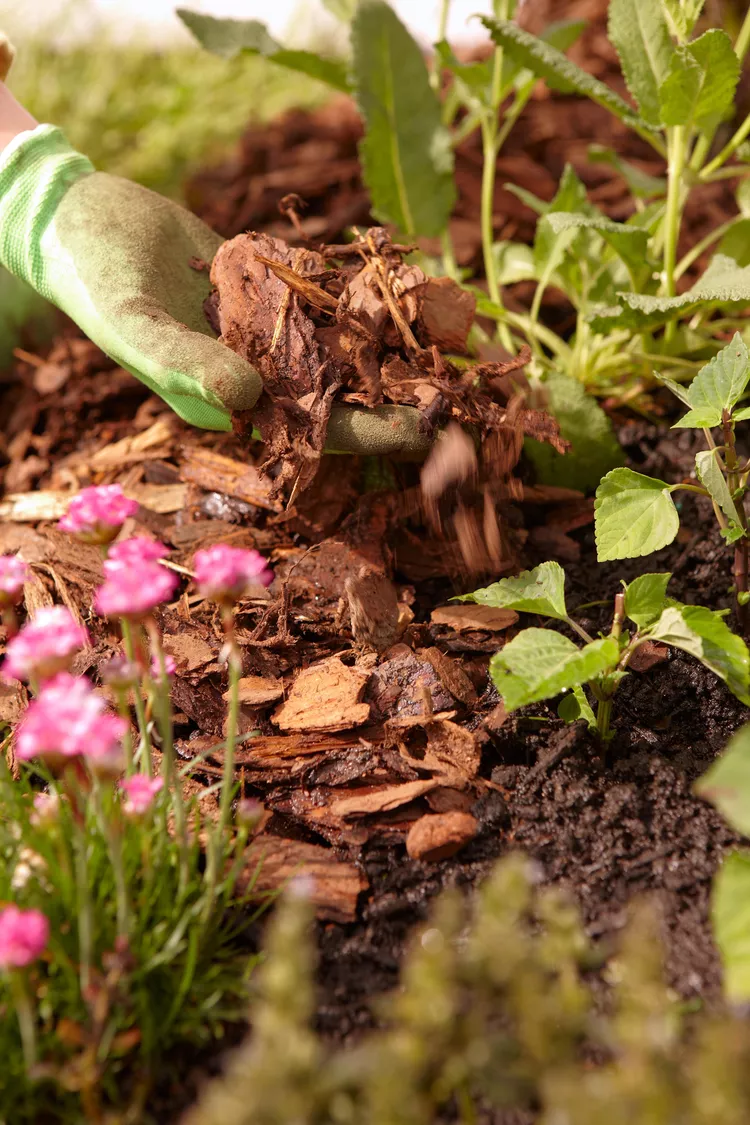
One of the most popular ways to use wooden sticks and twigs is to break them down with a mulcher to create organic mulch. Wood mulches look especially attractive in ornamental gardens, but they can also be used in vegetable beds and containers. Keep in mind that you may need to add a nitrogen-rich fertilizer since carbon-rich items like sticks can tie up some of the nitrogen in the soil.
11. Fill in raised beds.
Filling a raised garden bed to the top with soil can get expensive fast. You can save on your soil budget and reduce garden waste by filling part of the raised bed with sticks and twigs scavenged around your garden. This technique is similar to building a hugelkultur garden, but you can use it to fill most store-bought and DIY raised bed frames.
12. Play fetch.
Many dogs love to play fetch with sticks, so save a few of the best sticks you find for Fido. Protect your pet by knowing which plants produced the sticks you’re saving for your pup. Sticks from yew plants, for example, can be toxic to dogs.
13. Make a DIY wattle fence.
Wattle fences are usually made by weaving sticks and twigs together to create a simple fence with rustic charm. These basic structures can enclose parts of your garden, protect vegetable beds from certain pests, or act as windbreaks for sensitive plants. You can also make a mini wattle fence and use it as an eco-friendly garden bed border.
14. Attract hummingbirds.
If you find a particularly striking stick that’s nice and tall with lots of branching, sink it vertically into your garden to create a mini snag—a standing dead tree—for hummingbirds. Hummingbirds often perch on bare sticks between visits to hummingbird feeders, but males also perch on snags when scouting for rivals. To make your snag attractive to hummingbirds, place it near a feeder and close to a sheltering tree.
15. Build a bug snug.
Crafting a bee hotel with fallen sticks is one way to help out native pollinators, but you can also lash a few tall, sturdy sticks together with twine to create a tent-like structure and then pile some twigs and sticks inside. Known as a “bug snug,” this simple creation can shelter solitary bees, moths, butterflies, and fireflies during winter and make your garden even more wildlife-friendly.
16. Weave a dead hedge.
Part bug snug and part wattle fence, a dead hedge is a sturdy structure that provides habitat for wildlife and also functions as an inexpensive garden fence. To create a dead hedge, plant sturdy branches vertically in your soil in two parallel rows and then fill the space between the rows with branches, twigs, sticks, and other woody plant pieces. Dead hedges provide the perfect habitat for nesting birds and other critters, and you can add to them every time you pick up sticks in your yard.
17. Support tomatoes and beans.
Sink strong sticks into the soil beside vegetable plants and small trees to support wobbly stems and trunks. You can also tie a few sticks together to make a rustic DIY obelisk for pole beans or use found sticks to create a Florida weave trellis for tomatoes. Smaller sticks also make handy supports for floppy houseplants.
18. Experiment with other crafts.
Sticks and twigs have so many uses, we can’t hope to cover them all in this quick guide. If you’re looking for even more clever ways to use garden sticks and prevent yard waste, you may want to recruit your children and try out some of these simple crafts:
- Use sticks to craft a DIY wreath.
- Weave bendable sticks into a homemade basket.
- Make plant labels with sticks.
- Create a garden collage with sticks and other found objects.
- Build a tiny fairy house for your garden with sticks and moss.