
Sandy soil can be a challenge for gardeners. It has a reputation for being one of the poorest soils for growing plants because it’s low in nutrients and doesn’t hold much water. It also warms and cools quickly in response to air temperature, causing some plants to go dormant earlier in the fall than they would in, say, a rich, loamy soil.
Sandy soil has one big upside, though: It drains well. It’s an excellent choice for plants that like dry conditions and are prone to root rot. In general, plants that prefer sandy soil are happy being dry and do well with few nutrients—meaning less watering and fertilizing for you. Check out this list of flowers, herbs, vegetables, and trees that thrive in sandy soil.
Yarrow
Yarrow (Achillea millefolium) is a tough perennial with feathery, fern-like foliage and showy flowerheads that are clusters of tiny white, yellow, red, or pink flowers. This plant tolerates poor and rocky soil and is very heat- and drought-tolerant. Yarrow is native to North America and popular with pollinators. Plus, deer and rabbits won’t eat it. ‘Firefly Sunshine’ is a popular yarrow hybrid that produces yellow blooms.
Size: 2 to 3 feet tall and wide
Zones: 3–10
Cosmos
Cosmos (Cosmos spp.) are annuals with daisy-like flowers that thrive in well-drained, alkaline soil in full sun. They’re drought-tolerant plants that grow best in relatively dry soil. They attract pollinators and produce pink, purple, orange, yellow, white, and maroon flowers. They grow best when sown directly in the garden. ‘Sensation’ is a classic variety of cosmos that bears white, pink, rose, and crimson flowers that are 3-4 inches in diameter.
Size: 1 to 6 feet tall and 1 to 3 feet wide
Zones: 2–11
Lavender
Lavender (Lavandula spp.) is a resilient, sun-loving perennial that can take drought, heat, and poor soil and keep cranking out spikes of blue or purple flowers. The only thing lavender cannot deal with is soggy soil, so this is a go-to plant if your soil is rocky and sandy. Deer won’t eat lavender, and it can handle a slope. Harvest the blooms of this herb for cosmetic and culinary purposes, but keep in mind that not all varieties of lavender are edible. Some are ornamental only. English lavender is one of the hardiest types, with ‘Munstead’ and ‘Hidcote’ being two of the most popular English lavenders.
Size: 1 to 3 feet tall and wide
Zones: 5–9
Black-Eyed Susan
Pollinators love black-eyed Susans (Rudbeckia spp.), and so do people. These golden-yellow daisy-like flowers can be perennials or annuals, and they light up a garden all summer. This plant thrives in full sun and sandy soil; it’s a tough, low-maintenance plant that can take challenging conditions. Black-eyed Susan is a North American native wildflower. Plant breeders have created several black-eyed Susans. One of the most popular is ‘Goldsturm,’ a perennial that lives for decades and blooms in late summer.
Size: 1 to 5 feet tall and 1 to 3 feet wide
Zones: 3-11
Russian Sage
This small shrub produces purple-blue blooms from midsummer to fall on 3- to 4-foot spikes. Native to central Asia, Russian sage (Perovskia atriplicifolia) is a sandy soil favorite that’s easy to grow because it thrives in sparse, dry soil. Its blooms attract hummingbirds, bees, and butterflies, and it is heat- and drought-tolerant.
Size: 3 to 8 feet tall and 2 to 3 feet wide
Zones: 4–9
Sedum
Sedums (Hylotelephium spp.) are a group of succulent plants that come in a range of shapes, colors, and sizes. What all sedums have in common is a love of sandy soil and sun. So many species and varieties are available that sedums can be found in bloom three seasons a year. Bees and butterflies love the flowers, so sedums are excellent choices for pollinator gardens. They are heat- and drought-tolerant and can flourish in poor soil. ‘Autumn Joy’ is a classic sedum, producing pink flowers that resemble broccoli heads on 2-foot-tall stalks. They are perennials in most regions.
Size: 2–36 inches tall and 14 to 48 inches wide
Zones: 3–10
Allium
This perennial is also known as an ornamental onion, and it produces globe-shaped purple, blue, pink, or white blooms that look like something out of a Dr. Seuss book. Give alliums (Allium spp.) full sun, and they’ll fill your spring and summer garden with dramatic shape and color. ‘Globemaster’ is one of the taller allium varieties, producing pale purple flowers up to 10 inches in diameter on 4-foot stalks. Short on space? Grow chives in a container. They’ll give you clover-like clusters of pink flowers on 18-inch stems.
Size: 6 inches to 4 feet tall and up to 1 foot wide
Zones: 4–9
Rosemary
Rosemary (Rosmarinus officinalis) is a fragrant culinary herb native to the Mediterranean, Portugal, and northwestern Spain. It loves dry soil and hot, sunny weather. In warm climates, rosemary can grow into a shrub. In colder climates, it can be overwintered in a container or grown as an annual.
Size: 1 to 3 feet tall and 2 to 4 feet wide
Zones: 8–10
Daylily
Daylilies (Hemerocallis spp.) are drought-tolerant, easy-to-grow perennials that produce lush blooms in yellow, orange, red, pink, purple, white, and peach colors. There are more than 80,000 varieties of daylilies, so you can find one or two that are perfect for your situation. Daylilies come in different heights and bloom shapes, ranging from simple, single-petal lilies to ruffled, double-petaled confections. There are daylilies that rebloom and daylilies that bloom continuously. They like full sun and well-drained soil and are heat- and drought-tolerant. The secret to a daylily's surprising sturdiness is that it can hold water and nutrition in its tuberous roots, so it can get through droughty periods.
Size: 1 to 3 feet tall and wide
Zones: 3–10
Radishes
Radishes (Rhaphanus sativus) flourish in sandy soil because loose soil allows for large and even root development. Like other root veggies, they’re prone to root rot in soil that’s soggy, and they can become stunted or misshapen in heavy soil. Sandy soil is just the ticket for growing great radishes. They are usually grown as a cool-weather crop in early spring or autumn. Radishes are fast-growing, with most varieties ready to eat just a month after planting.
Size: 1 to 3 feet tall and 1 to 2 feet wide
Zones: 2–11
Catmint
Catmint (Nepeta spp.) is a low-growing perennial that forms mounds of gray-green leaves topped by spikes of purple flowers. This tough-as-nails plant blooms all summer and is extremely heat- and drought-tolerant. It’s a fast-growing plant that thrives in the worst soils. Deer and rabbits do not like to eat its minty, aromatic leaves, but pollinators love this plant. ‘Walker’s Low’ is an easy-to-grow hybrid that grows to 30 inches tall and wide. ‘Cat’s Pajamas’ is a compact catmint that only grows about a foot wide.
Size: 6 to 30 inches tall and 12 to 36 inches wide
Zones: 3–9
Thyme
Native to southern Europe and northern Africa, where the temperatures are hot, the rain is scant, and the soil is dry, thyme (Thymus vulgaris) thrives in sandy soil and even does well in rocky soil. This tough herb makes tasty leaves that flavor Italian and Middle Eastern cuisines.
Size: 6 to 18 inches tall and wide
Zones: 4–9
Blanket Flower
This tough prairie native blooms all summer and into fall. Blanket flowers (Gaillardia spp.) usually are cheery shades of red and yellow, and pollinators love them. Their sensitive roots do not like to be wet, so they were born for sandy soil. ‘Fanfare’ is a popular variety of blanket flower that has bright red blooms with yellow at the end of the petals.
Size: 1 to 3 feet tall and 1 to 2 feet wide
Zones: 3–10
Coneflower
People and pollinators love coneflowers (Echinacea purpurea). Native to North America, these tough perennials bloom from summer to fall in sandy soil, producing big, cheerful blooms in shades of purple, white, yellow, red, and orange. They need full sun and can tolerate a lot of drought and heat. Purple coneflower is the most popular species, producing purple flowers on 5-foot tall stems. If you have a smaller garden, try ‘PowWow Wild Berry’, which produces bright purple flowers on a more compact plant that grows just 2 feet tall.
Size: 2 to 5 feet tall and 1 to 4 feet wide
Zones: 3–9
Coreopsis
This delicate-looking plant is a rugged, dependable native of dry coastal areas, so it loves sandy soil. Coreopsis (Coreopsis spp.) thrives in full sun and produces flowers in shades of orange, pink, red, or yellow all summer with regular deadheading. Some coreopsis are perennials, and others are annuals. ‘Moonbeam’ is a popular perennial coreopsis that produces pale yellow flowers and looks great in borders.
Size: 1 to 4 feet tall and 1 to 3 inches wide
Zones: 3–9
Bearded Iris
These garden favorites come in a rainbow of colors and need little help from you to flourish. Bearded irises (Iris x germanica) grow from a rhizome that spreads quickly in the garden, so you need to divide them every few years to keep them from overcrowding. Many bearded irises are reblooming, so you’ll get flowers in the spring and again in the early fall.
Size: 1 to 4 feet tall and 1 to 2 feet wide
Zones: 3–9
Red Oak
Red oaks (Quercus rubra) are tough trees that grow in sandy, clay, loam, or gravelly soils. Also known as Northern red oak, they can live for 150 to 300 years. They are slow growing but worth the effort because you are investing in future generations.
Size: 60 to 70 feet tall and 40 to 60 feet wide
Zones: 3–8
Live Oak
Live oaks (Quercus virginiana) are majestic trees that thrive in sandy soil and can live for centuries. They are different from most oak trees in that they don't drop their leaves in fall; they wait until January or February. This is a classic tree in the coastal South. The Duffie Oak in Mobile, Alabama, is more than 350 years old, making it older than the United States.
Size: 40 to 80 feet tall and 60 to 100 feet wide
Zones: 7–10
Longleaf Pine
Longleaf pine (Pinus palustris) is an evergreen tree with 10-inch needles. It’s a canopy tree that provides filtered shade for other plants in the landscape, and it loves sandy soil. Longleaf pines are fast-growing, gaining up to 3 feet of height in a year. Unlike many fast-growing trees, longleaf pines are long-lived, with some growing for more than 300 years.
Size: 80 to 125 feet tall and 30 to 40 feet wide
Zones: 7–9
Blueberry
Blueberry bushes (Vaccinium corymbosum) have shallow root systems, so they need good drainage to thrive, and no soil delivers good drainage like sandy soil. They also like acidic soils with a pH of around 4.5, so be sure to test your soil pH and add amendments to lower the pH if needed. Mulch them to keep those shallow root systems cool and moist.
Size: 1 to 12 feet tall and 2-10 feet wide
Zones: 3–10
Watermelons
Watermelons (Citrullus lanatus) are native to northern Africa and were grown in ancient Egypt. They thrive in sandy soil and are prone to root rot, so they like soil that drains well. For the sweetest, biggest melons, amend the sandy soil with organic matter such as compost and fertilize the plants. Water them deeply and infrequently and make sure they get full sun.
Size: 1-2 feet tall and 6 to 8 feet wide
Zones: 2–11
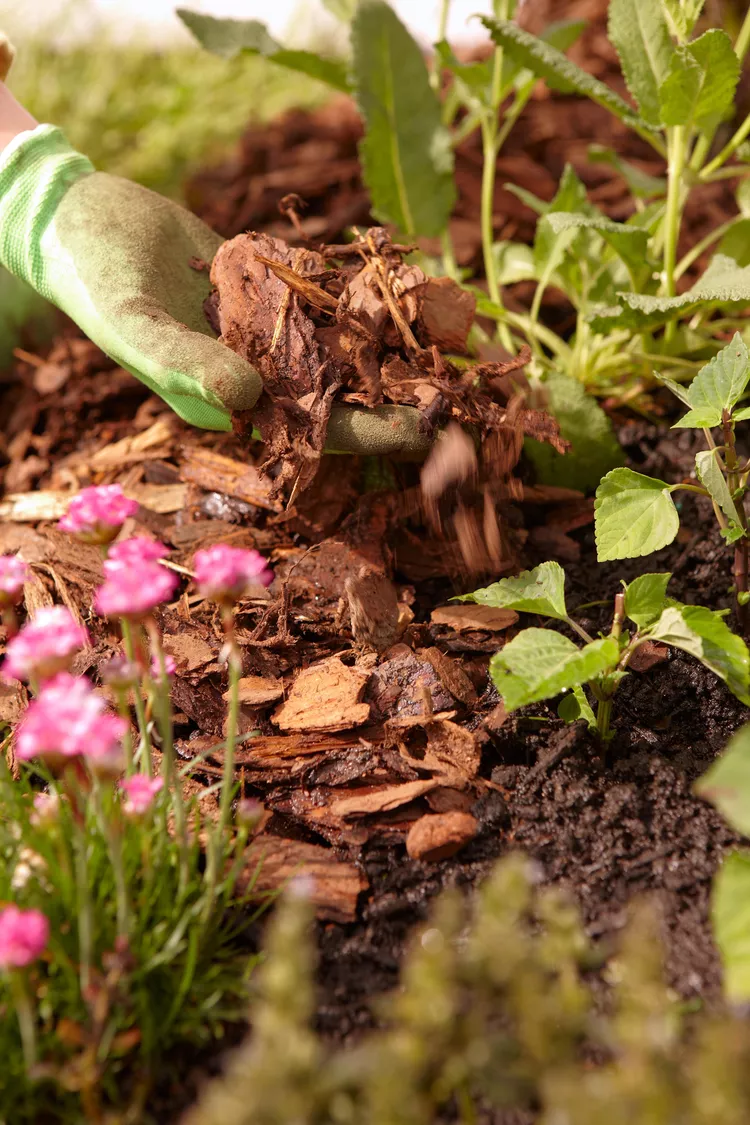
Even the hardiest, sandy soil-loving plants appreciate organic matter, such as compost, around their roots. It adds nutrients, slows water runoff, and keeps the roots cool.