How to Aerate Your Lawn for Healthy, Green Grass

41.1K
2.9K
547
2025-11-12
How to Aerate Your Lawn for Healthy, Green Grass

Mowing, watering, weeding, fertilization, and pest control are common yard maintenance practices, but aeration is a basic lawn care step many people skip. Although the job can be tedious, it's not difficult, and the benefits of aeration—green, healthy grass—are worth the time and effort.

The goal of aerating a lawn is to perforate the soil with small holes so air, water, and fertilizer can more easily reach grass roots. Several methods and tools are used to accomplish the task manually or mechanically. When deciding how to aerate your lawn, consider your yard size, grass type, and budget.

Why Aerate Your Lawn?

Over time, soil—especially clay—tends to compact and harden due to foot traffic, mowing, and poor drainage. This prevents water, oxygen, and nutrients from reaching the hungry roots of your grass. As a result, your lawn becomes thin, pale, and patchy. Lawn aeration breaks up hard soil so the grass roots can feed more easily. When determining how to aerate your lawn, consider two basic types of aerators:

  • Spike aerators, which poke holes into the soil
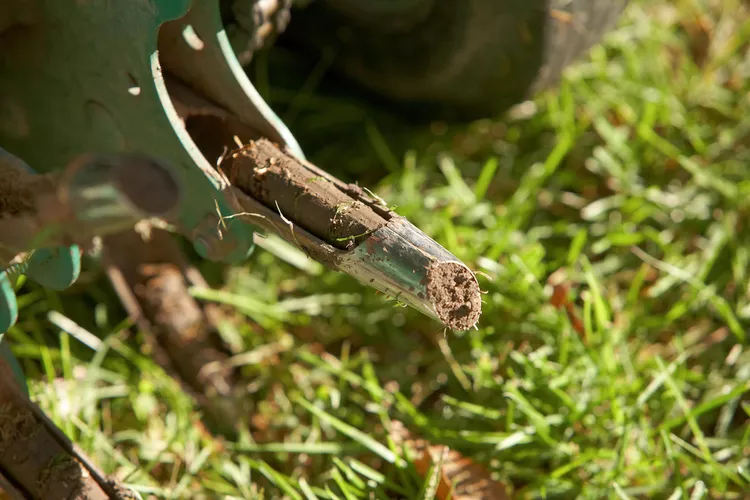
  • Plug aerators, which remove a plug of soil and grass

Both break up hardened ground, but plug aerators are more effective.

When to Aerate Your Lawn

The best time to use aeration equipment depends on your grass type. Cool-season grasses, such as fescue, bluegrass, or ryegrass, should be aerated in early spring or early fall. Warm-season turf, including Bermuda grass, zoysia, or St. Augustine, does best with aeration in the late spring.

Regardless of your lawn's grass type, do not aerate the lawn within one year of planting grass seed or sod. Seedlings need time to reach maturity before being able to withstand aeration.

How to Aerate Your Lawn Manually

Large stretches of grass require mechanical aerator tools, but a handheld (or worn-on-the-foot) aerator will work for smaller landscapes. There are several types of manual aerators: aerator shoes, handheld aerators, and manual drum aerators.

Aerator Shoes

Aerator shoes with sturdy metal buckles are a great budget-friendly choice for small yards. The lawncare tool straps on over regular footwear and has sharp spikes beneath the soles that poke holes in your yard as you walk across your grass. Penetrate the turf thoroughly by making multiple passes over your lawn in different directions.

Handheld Aerators

Handheld aerators come in various configurations, but most resemble a pitchfork. The manual tool is generally a spike aerator, but some handheld aerators are designed to remove plugs. Using a handheld aerator is simple but tiring: Stab the spikes deeply into the grass, pull the tool out of the soil, and repeat, taking care to cover the entire lawn. Consider investing in an aerator with a foot bar for extra leverage.

Manual Drum Aerators

Manual drum aerators, sometimes called lawn spikers, are spike- or blade-covered heavy drums with long handles. Push the drum aerator across your lawn, making at least two complete circuits in different directions. Most manual drum aerators are spike lawn tools, but some are plug aerators.

How to Aerate Your Lawn Mechanically

Consider mechanical tools to aerate your lawn more quickly and efficiently. Mechanical aeration methods are ideal for large yards and are a good choice if you have concerns about hurting your back. These heavy-duty aerators usually remove plugs of soil and grass, which is the best method of lawn aeration. Lawn aerator rental is available at many garden centers and home improvement stores as an alternative to purchasing a tool.

Pull-behind Aerators

Pull-behind aerators look like manual drum aerators, but rather than you pushing the tool, a riding lawn mower does the work. Pull-behind aerators are generally heavier and spikier than manual lawn aerators, more effectively executing the task.

Gas-powered Aerators

Gas-powered aerators look like lawnmowers, but instead of spinning blades that cut grass, they have spinning spikes that aerate the soil. Some multi-functional models contain a dethatcher drum for added convenience, capturing the organic debris that builds up between the aerator and soil.

Tips for Aerating Your Lawn

A few tips for how to aerate your lawn will come in handy, regardless of the aeration method and tool you choose.

Preparation

A few days before aeration, rake up any fallen leaves or debris. Mow your grass to about half its usual height and water it well. Mark the locations of sprinkler heads and other small in-ground obstacles with flags or chalk.

During Aeration

Aerate the lawn using your chosen tool. If it's a spike aerator, make at least two passes over the yard, each in a different direction. If using a plug aerator, one pass is sufficient.

Aftercare

Leave any soil plugs on the lawn; they will return nutrients to the ground as they decompose. Fertilize your lawn or apply a top dressing of compost. This is also a good time to reseed any bare patches. Return to watering and mowing your lawn according to your regular schedule.

Frequently Asked Questions

  • How often should you aerate your lawn?

    You should aerate your lawn at least once a year. Heavily used yards and landscapes with clay soil should be aerated more often.

  • Can you water and fertilize your lawn after aeration?

    Yes, you can water and fertilize your lawn after aeration. In fact, newly aerated holes give water and fertilizer the most direct path to grass roots.

  • Can underground utility lines, pipes, or wires be damaged during aeration?

    Utility lines and pipes are generally buried deep enough to avoid damage during aeration. Wires and underground sprinkler systems, however, are potentially at risk. Use flags to mark hidden objects, helping you avoid them when aerating your lawn.

Related Article

How to Plant and Grow Bermudagrass for a Lush Lawn
34.9K
2.4K
806

How to Plant and Grow Bermudagrass for a Lush Lawn

A turfgrass for warm climates, Bermudagrass forms a dense lawn that stands up to traffic and heat. Here's how to care for a Bermudagrass lawn.
Can You Mow Wet Grass? The Answer, Plus 7 Mowing Tips
10.7K
214
38

Can You Mow Wet Grass? The Answer, Plus 7 Mowing Tips

Wet grass, whether it’s from morning dew or relentless rain, makes lawn care challenging. Keep your turf in check with our mowing tips.
The Best Time to Add Fertilizer to Your Lawn Before Winter
40.1K
3.6K
721

The Best Time to Add Fertilizer to Your Lawn Before Winter

Cultivate a happy, healthy lawn all year long with a nutrient boost before freezing weather occurs.
5 Simple Steps for Preparing Gardens for Winter Weather
20.1K
201
86

5 Simple Steps for Preparing Gardens for Winter Weather

Follow our five-step guide to preparing gardens for winter weather, including protecting perennials, trees, and shrubs from harsh conditions.
21 Plants for Sandy Soil That Thrive in Dry Conditions
23.4K
1.2K
408

21 Plants for Sandy Soil That Thrive in Dry Conditions

Discover 21 plants that flourish in sandy soil. From vibrant flowers to hardy shrubs, find the best options for your garden.
What Every Homeowner Needs to Know About Dethatching Lawns
31.5K
944
169

What Every Homeowner Needs to Know About Dethatching Lawns

Restore your grass so it is lush and green by learning the why, when, and how of dethatching a lawn. These lawn dethatching tips will make you an expert.
How to Plant and Grow Cardinal Climber
26K
780
343

How to Plant and Grow Cardinal Climber

Cardinal climber is a fast-growing annual vine with vibrant red flowers that bloom all summer. Learn how to grow it here.
How to Plant and Grow Serviceberry
32.7K
981
176

How to Plant and Grow Serviceberry

Discover essential tips for growing serviceberry, a flowering tree with edible berries that is one of spring's first sources of nectar.
11 of the Best Flowering Vines for Shade
24.9K
1.7K
696

11 of the Best Flowering Vines for Shade

Brighten up your shady garden with these vining plants that have beautiful flowers.
5 Best Raised Bed Garden Layouts—and How to Choose the Right One for Your Space
33.7K
1.7K
370

5 Best Raised Bed Garden Layouts—and How to Choose the Right One for Your Space

Designers share their favorite raised bed garden layouts for all kinds of spaces and gardeners.
5 Smart Solutions for Dealing with Poor Drainage in Your Yard
47.7K
2.4K
620

5 Smart Solutions for Dealing with Poor Drainage in Your Yard

Find out how to improve drainage in soil so that you can grow your garden plants. Or, if you can't, learn how to fix the soil that doesn't drain so that you can still enjoy colorful flowers.
How to Plant a Water Lily in a Container to Brighten Up Your Pond
18.6K
556
100

How to Plant a Water Lily in a Container to Brighten Up Your Pond

This aquatic plant looks beautiful in water gardens large and small. Plant waterlilies in a container by following these easy step-by-step instructions.
How to Plant and Grow Haworthia
38.8K
3.1K
901

How to Plant and Grow Haworthia

Discover how to care for members of the genus Haworthia as houseplants or outdoors. Learn about proper lighting, fertilizing, and heat as well as how to propagate these fascinating little succulents.
How to Grow and Care for Indoor Cyclamen
18.7K
749
104

How to Grow and Care for Indoor Cyclamen

Florist’s cyclamen have a reputation for being tricky to grow but this guide will help you keep these plants blooming in winter and then rebloom year after year indoors.
How to Get Orchids to Rebloom with These 5 Must-Know Tips
32.9K
1.6K
164

How to Get Orchids to Rebloom with These 5 Must-Know Tips

Find out what to do with moth orchids after they bloom and get them to rebloom year after year.
How to Propagate a Rubber Plant Successfully
28.1K
1.7K
725

How to Propagate a Rubber Plant Successfully

Learn how to propagate rubber plants through cuttings and air layering with this step-by-step guide.
How to Arrange Plants In Your Living Room to Add Natural Style
14.9K
148
28

How to Arrange Plants In Your Living Room to Add Natural Style

Here are tips for how to arrange plants in your living room and how to care for them to bring new life to your home's decor.
Top Plants for Florida Landscaping and Gardens
49.5K
494
207

Top Plants for Florida Landscaping and Gardens

The tropical environment means top plants for Florida will thrive and grow, adding lush, green bulbs, trees and perennials to landscapes and gardens.
Is Electroculture Gardening the Next Great Thing in Plant Care?
34.6K
3.1K
778

Is Electroculture Gardening the Next Great Thing in Plant Care?

Electroculture gardening harnesses atmospheric energy to naturally and organically promote plant growth. Learn what electroculture gardening is, plus how you could try it at home.
Can You Plant Garlic in the Spring? With These Must-Know Tips, You Can
37.1K
3.3K
600

Can You Plant Garlic in the Spring? With These Must-Know Tips, You Can

Even if you missed the fall planting window, here's how you can plant garlic in spring and still get tasty greens and bulbs to eat.