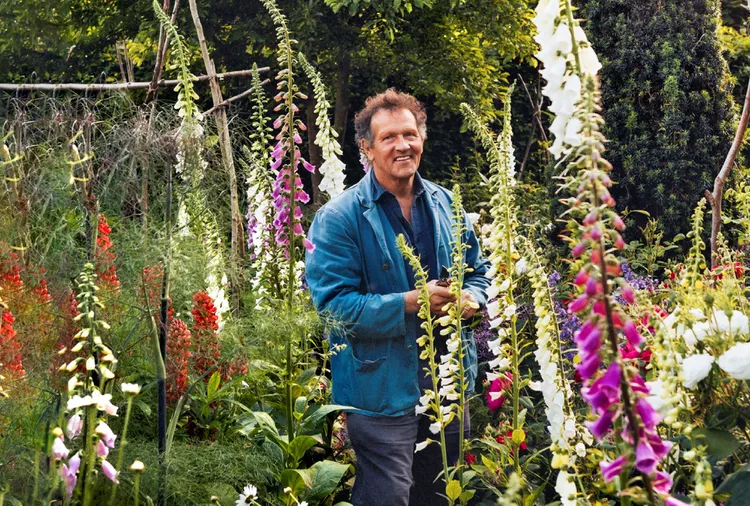
In the UK, Gardeners’ World has been an institution since it first aired in 1968. The affable, knowledgeable Monty Don is the ringmaster of most of the episodes from his garden in Herefordshire, England, surrounded by hornbeam hedges and earnestly trailed by his beloved dogs, Nell, Ned, and Patti.
Each week from spring to fall, 33 times a year, he shares his latest garden projects—dividing overgrown perennials or layering tulip bulbs in pots—while introducing the show’s various presenters. Each one-hour episode takes viewers through a variety of gardens. One week it might be a scrappy sidewalk plot in London, an Elizabethan cloister in Wales, or the national collection of eryngiums in North Yorkshire. I recently sat down (over Zoom) with Monty—fresh from weeding his garden—who identifies as a self-taught gardener, even with a long television career and 12 books under his belt.
Stephen: As a new viewer of Gardeners’ World, I’ve noticed that the show often emphasizes themes that go beyond horticulture, such as sustainability and gardening for wildlife or mental health. Have such topics have come to the forefront recently, or have they always been part of the show?
Monty: Clearly, one of the main things that’s changed over the last 20 years that I’ve been doing the show is the increased awareness of the environment, the awareness of climate change, and the awareness of working with nature rather than trying to control it all the time. Previously, gardening was strongly influenced by 20th-century approaches where the manipulation of chemicals to control so-called pests was a key part of horticultural skills. And people like me who said, ‘Well, we need to live with these things and use them to our benefit,’ were regarded as either sort of left field or incompetent. That has changed. It’s been a huge shift.
Stephen: In what other ways do you think gardening has changed, especially considering the disruptions of the past several years?
Monty: During the pandemic, millions of people were at home when they would not otherwise be. And in the UK, gardening is such a central thing. I mean, I’ve traveled the world, and there is no place where it is so deep in the national DNA. It doesn’t matter if you’re a duchess or a dustman, we share that common ground without ever questioning it. For most people, it’s something that is done either after work on summer evenings or during the weekend as an adjunct to the rest of your life.
Suddenly, for the whole nation, if you had a garden, it was your lifesaver because you could be outside. We were all sort of shell-shocked and severely locked down. Gardens became the one piece of outdoor sanity we had. People started to notice things from nature that they might have missed before. For years, we’ve watched killer whales or snow leopards in BBC documentaries, but for the first time for many people, we noticed that the natural world is actually right on our doorstep. They weren’t killer whales; they were goldfish in a pond. They weren’t peregrine falcons or eagles; they were blackbirds and songbirds. And I think there was a great opening of awareness. People realized that the intimacy and the sort of domesticity provided by gardening were deeply enriching. People became aware of their gardens as a portal to the natural world.
We all make mistakes; we are all learning. Let's share that. That's how you learn.
Stephen: During the lockdowns of 2020, you started airing videos of backyards that viewers recorded on their phones and submitted. I was struck by the authenticity of those segments and how heartwarming it is to see how your viewers treasure their gardens.
Monty: We love them too. But I can assure you it was born out of a production panic. We wondered how we were ever going to fill up an hour’s program. Because we were filming under such restricted quarantine circumstances, we asked viewers to send in homemade videos. As they started to come in, we realized we had something new on our hands. The films are very domestic, very human, very much micro stories. And the best ones are always personal. Yeah, some of them are filmed in a slightly clumsy way, but that makes them deeply personal. I’ve always said that the thing that defines a garden is the gardener. So all gardens are a human story.
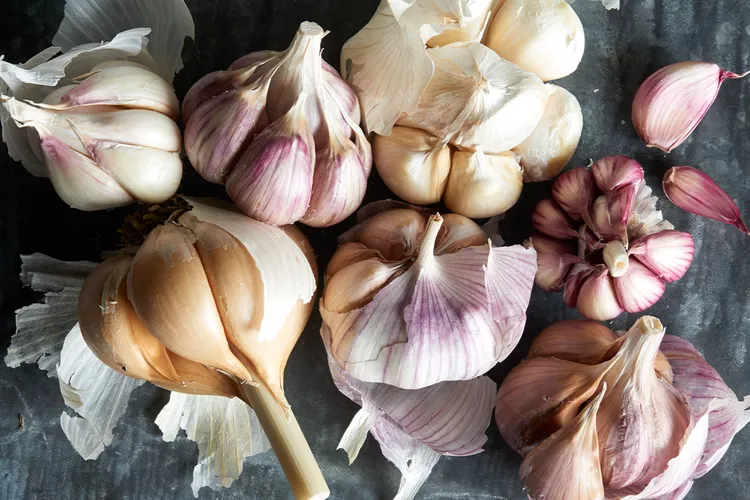
Stephen: Some of them really stayed with me. For instance, the 7-year-old boy who told us how much anxiety he had been dealing with the past couple of years and how happy he was to share his backyard, especially his patch of elephant garlic. I had tears in my eyes watching it.
Monty: Agreed. My editor said to me, ‘You have to watch this one. If it doesn’t move you, something’s wrong.’ I mean, one of the things that has helped move this topic into the show is that I’ve suffered personally from depression all my adult life. I’ve written about it and talked about it, not because I want to—because, you know, I’m British, I’m reticent, I have all kinds of inhibition—but because whenever I have done, clearly, it’s helped people. And that has freed things up so that I can say I, too, suffer from these things. It’s just an illness, and it’s a difficult one, but it can be dealt with, and it can be treated. The whole Zeitgeist has changed. When I was young, mental illness of any kind was shameful and humiliating. It was something you hid. But I don’t think people hide it as much as they did before. Still, in Britain, we have a serious problem with it.
Stephen: People like myself who love gardening look to England because, as you said earlier, you have a natural fixation on horticulture. I try to encourage people to see it’s not always a low-maintenance garden that’s needed, and that the maintenance—the act of gardening—is part of the fun. You allow a lot of wildness with the plantings. Please talk about the British style of gardening, which I’d define as a romantic combination of looseness and structure.
Monty: There is a fundamental difference between the British and American relationships with the wild and the natural world. Ours is, as you know, a very small country with a very, very tame landscape. There is nowhere in Britain that isn’t accessible. We don’t have any true wilderness. You do. You have the Grand Canyon, you have the Rockies, you have the desert, you have the forest—the scale is so different. The British garden has a lot of nostalgia for the landscape of the countryside. Our idea of British countryside is a soft place of hedgerows or fields. It’s an incredibly beautiful green, vibrant, soft place. It’s heaven, you know, and that’s what we try and re-create.
The whole idea of a British garden is to let it go as far as possible and then just pull it back a little bit. So our herbaceous borders always feel like they’re overspilling.
Stephen: There’s a lot of conversation in the garden press about encouraging wildlife of all sorts, including pollinators, frogs, and hedgehogs. Even if it’s the No Mow May campaign on social media. I can see it’s a big emphasis on your show as well. What are your thoughts about the development of gardening with wildlife in mind?
Monty: A garden is manipulated; it’s managed; it’s planted; it’s created. But like a doctor, first thing is—do no harm. Encourage birds; encourage mammals and insects. I think we all know, partly through climate change, partly through our whole relationship with the natural world, that we must let it in, but I don’t think you can take mankind completely out of the gardening equation.
Stephen: You have an amazingly filmable garden with many separate garden rooms in it; each one functions almost like a set. How did that develop, and what brings you joy—and what are the pain points—in your garden?
Monty: It’s no accident. We’ve created 23 different garden spaces in just over 2 acres. We’re always looking for more content. I’ve subdivided the garden into various spaces for filming, and it’s a lot of work to keep up with. I have two full-time people working with me, and I spend a lot of time gardening, my son spends a lot of time, my wife spends a lot of time, and it’s incredibly labor-intensive. And that’s to feed the beast—33 hours of television every year and my books.
Recently, our garden experience has been one of climate change and extremes. Last summer, it was up to over 40 degrees [104°F]. Hot and dry, very dry. We were in a drought, while normally this is a very wet part of the country. Then in December, it went down to minus 15 [5°F]. Those are big extremes for plants. Britain is an island experiencing continental weather, which makes these extremes on either end. And that’s absolutely new.
The second problem is that now that we are having warmer winters, we’re getting many more fungal problems. The luxury we’ve had of growing a wide range of tender plants is over—I think we’re going to have to adapt. For example, I’m not going to store tender perennials such as my salvias, cannas, bananas, and gingers over the winter anymore. I will plant them out and leave them in the ground to overwinter. If they die, they die. We all make mistakes; we are all learning. Let’s share that. That’s how you learn.
In terms of what I like, the positives: I recently came back exhausted from Chelsea [the Royal Horticultural Society’s Chelsea Flower Show], so I spent the whole day on my own in the garden. And I potted; I reorganized things. I spent an hour or so pinching the tomatoes. I staked. That’s what I love doing in the garden, nothing glamorous. All the minutiae of gardening make me very happy indeed.
I love tackling new projects, and that’s fun and great. But in the end, it’s the process. I always say to think of a garden like a river, and you’re standing on the bank with the waters constantly moving. It’s never the same water. Gardening is a similar constant process of doing the same thing, but each time it’s different. I find that meditative, comforting, and never boring. So the big glamour stuff, creating a new garden or planting trophy plants—I’m a sucker for that like everyone else—but it’s not what it’s about. With gardening, it’s really all in the doing.
Gardeners’ World can be streamed in the U.S. with a BritBox subscription or through Amazon Prime.