There's something refreshing about the summery aroma of basil growing indoors on a windowsill. When you gently brush the plant, the vibrant scent quickly fills the air. Plus, having a pot of basil growing in a sunny spot in your kitchen ensures you'll always have this flavorful herb within easy reach when cooking, no matter the season. Sure, you could purchase potted basil plants from your local garden center or grocery store in spring and summer, but with just a few dollars for seeds and a little of your time, you can learn how to grow basil indoors year-round.
How to Grow Basil Indoors from Seed
Basil is one of the easiest herbs to grow indoors. You can raise this plant from cuttings or seeds. Starting seeds inside gives your seedlings a warm and safe start. You need to put the basil plants in your sunniest window (preferably one facing south or east). Follow these steps to learn how to grow basil indoors from seed.
1. Plant basil seed at the right time.
Basil is one of the easiest herbs to grow from seed. Read the seed packets to know how many weeks of growth your plants need before being moved outdoors. You can start basil seed indoors and transplant the grown plant outside in rich, well-drained soil once all danger of frost has passed. If you live in a cold or very hot climate, start your herb seeds in early spring so the young plant is well established before the summer heat and winter cold. Gardeners who live in a mild climate can transplant seedlings into the garden most of the year.
2. Prepare the pots.
Pre-moisten the soil so it's slightly damp to keep your seeds from shifting when you first water them. Then, loosely fill small containers with high-quality potting soil. Commercial starting mixes are sterilized to remove weed seeds and disease-causing microbes. Choose a container or pot that allows for good drainage. If your pot doesn't have drainage, create holes in the bottom.
3. Plant, water, and cover the seeds.
Plant the seeds by gently pressing them into the soil with your finger. Lightly cover them with soil after checking the seed packet for instructions on planting depth. Water the seeds sparingly and cover the pot or container with plastic wrap or a dome. This will keep the soil mix and seed warm to encourage germination.
4. Provide plenty of light.
Basil grown indoors needs lots of light. Put the container in a sunny area, such as near a south-facing window, or place it under a grow light. When the seedlings emerge, remove the plastic wrap or covers. If you use grow lights, adjust the height of the fixture as the plants grow to ensure the light bulbs are at least 6 inches above the top of the plants. When growing herbs indoors on a sunny windowsill, give the plant a quarter turn weekly to expose all sides to the sun to ensure the seedlings won't be spindly and pale.
5. Increase air circulation and humidity.
Place a small fan near the seed starting area to keep the air moving and reduce damping off, a common fungal disease. To boost humidity indoors—especially in the wintertime—place the plants on a tray of wet pebbles to raise the humidity around them. Fill the tray with water until the water's surface is just below each pot's bottom. Another option is to place a humidifier nearby.
6. Keep seedlings moist.
Once the indoor basil seedlings start growing, don't let the soil dry out. It's essential to keep your basil plants well-hydrated at this stage to encourage healthy root growth. This helps your plants become larger and more efficient at absorbing water and nutrients from the soil.
7. Harden off the plants.
About a week before transplanting your seedlings, gradually acclimate them to outdoor conditions. Begin by putting them outside for a few hours on a warm day in a shady spot to let them get used to the differences in temperature, humidity, and air movement. Remember to bring them indoors again at night. Over the next few days, gradually increase the time they spend outdoors. By the end of the week, the plants should be acclimated and ready to be transplanted.
How to Grow Basil Indoors in Water
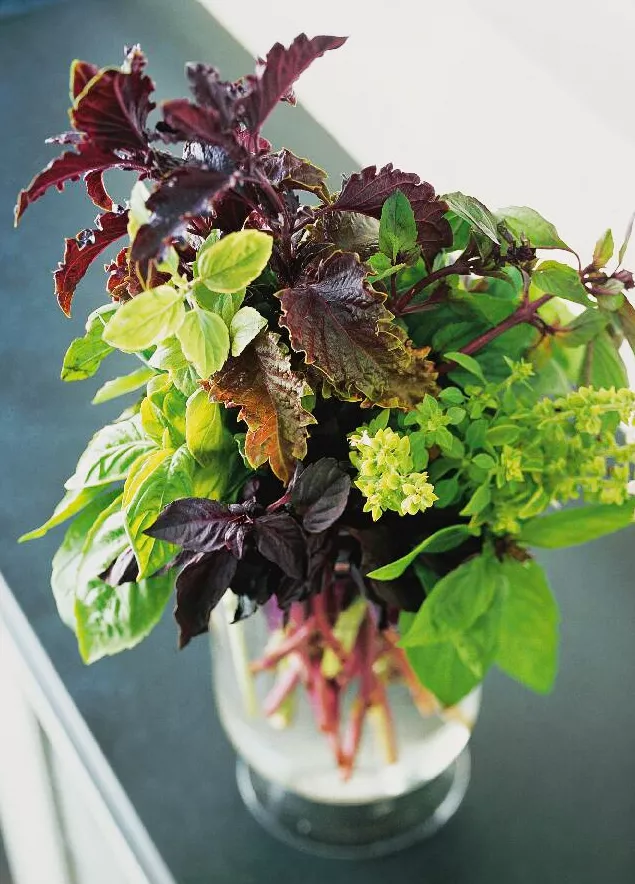
Another way you can multiply your basil plants indoors is by rooting them in water. To do this, take a basil plant and cut its stems to 3 to 4 inches long. Strip off any leaves that would be underwater. Fill a glass with 2 inches of water and place the stems in the glass.
As the stems start growing roots, change the water every few days. This discourages bacteria that can create an unhealthy situation for your basil cuttings. When the roots are about an inch long, transplant the cuttings into fresh potting mix. Keep your new basil plants well-watered for the first week or two. Soon, you should see new leaves growing, and you can cut back on watering a little.
How to Use Fresh Basil in Recipes
Now that you know how to grow basil indoors, fresh basil will be available for all your recipes that call for this fresh herb. This easy-baked mozzarella and tomato antipasti takes 15 minutes to make and includes Italian favorites for a delicious appetizer—just add crostini. Thai food fans will devour this chicken curry loaded with basil. A basil-based chimichurri adds spice and loads of flavor to grilled vegetables or chicken for summer barbecues, and paired with a tomato-Basil spritz cocktail, you have a perfect warm-weather meal.