How to Prune a Cherry Tree

40.9K
2.9K
1.1K
2025-11-02
How to Prune a Cherry Tree

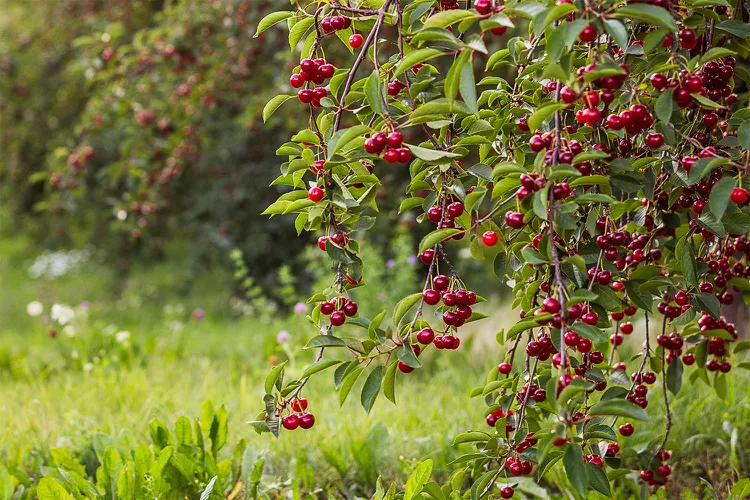
Cherry trees make beautiful additions to the garden with their profusion of spring flowers and vibrant yellow and orange fall foliage. Left to their own devices, standard cherries will grow into small trees with thick branching and a dense canopy of leaves, creating deep shade below. But to keep your trees producing full crops of cherries each year, annual pruning is in order. Whether you’ve planted just a couple of trees or a whole grove, here's what you need to know to easily and effectively prune your cherry trees for years of harvests ahead. 

Types of Cherry Trees

When it comes to fruiting cherry trees, there are really two kinds: sour cherries (Prunus cerasus) and sweet cherries (Prunus avium).

1. Sour Cherries

Often called dwarf cherries for their smaller size, sour cherries will reach about 20 feet if allowed to grow unchecked on standard root stocks. These trees grow best in USDA Zones 4-6; they favor cooler climates and are also more disease and pest resistant than sweet cherries. Sour cherries are typically used in baking rather than eating fresh due to their tart flavor. Self-fertile cultivars like ‘Montmoren’ produce copious amounts of bright red fruit.

2. Sweet Cherries

Unlike sour cherries, sweet cherries can be harvested and eaten directly from the tree owing to their exceptionally sweet flavor. Standard sized (non-dwarf) sweet cherries will grow to about 35-40 feet with age and do best in Zones 5-8. At maturity, popular cultivars like ‘Bing’ can produce nearly 100 pounds of deep red fruit in a single year.

Why Prune Cherry Trees?

While you don't have to prune cherry trees, doing so has a number of benefits for your fruit harvest. As mentioned, cherry trees can reach great heights and an annual pruning benefits the grower by slowing the upward expansion of the tree, making them much easier to harvest. Another benefit is that regular pruning opens up the canopy of trees to allow greater air flow and light penetration. The more light, air flow, and access to pollinators, the more fruit can be produced.

When to Prune Cherry Trees

The best time to prune fruiting cherry trees is in late winter before leaves have begun to emerge for the season. While dormant, the full form and structure of the tree is visible and any broken or crossed branches can easily be identified. In some regions, sweet cherry trees can be more susceptible to bacterial and fungal diseases. Because of this, some growers might prefer to prune their sweet cherry trees in late summer after fruit has fully set.

Cherry Tree Pruning Tools and Materials

Before you begin pruning your trees, always be sure to sterilize your tools with a solution of one part bleach mixed into nine parts water. The bleach will kill any potential bacteria, fungi, or viruses waiting dormant on your tools to invade plants through wounds.

To prune cherries, you will need a pair of pruning shears, hand saw, and for taller trees, a pole saw. A pair of gloves, long sleeved shirt, pants, closed-toed shoes, and safety glasses are highly recommended when doing any pruning. 

Tips for Pruning Cherry Trees

To begin pruning, first look for any broken or damaged limbs. Crossed branches will often rub together and produce seeping wounds, opening up the tree to infection. Dead branches will appear duller or lighter in color and should always be removed. Secondly, take a look at the base of the tree. Prune off any suckers or watersprouts coming from the base or along the stem. Branches below the graft union will not grow true to type and should never be allowed to grow.

Sour cherry trees should be grown in a large, vase-like shape. Newly planted and young trees should be “topped” by cutting the central leading stem. Rather, three to four lateral branches should be allowed to grow to provide the framework for the bulk of the tree. Ideally, these main lateral branches should be about 18-24 inches above the ground and evenly spaced to avoid future crowding.

Encourage further lateral branching by trimming off vertical, hanging, and thin branches. Prune off any branches growing toward the center of the canopy. Only remove about a third of previous year’s growth to encourage new growth. Sour cherries produce most of their fruit on the current year’s growth.

Unlike sour cherries, sweet cherries require less pruning than sour cherries and should be pruned along a central leader. As with sour cherries, remove any broken or crossed branches, vertical shoots that might compete with the central stem, and crowded growth. Encourage lateral branch development by pruning back by about a third. This will help in the development of new fruit buds.

Related Article

How to Plant and Grow Bermudagrass for a Lush Lawn
34.9K
2.4K
806

How to Plant and Grow Bermudagrass for a Lush Lawn

A turfgrass for warm climates, Bermudagrass forms a dense lawn that stands up to traffic and heat. Here's how to care for a Bermudagrass lawn.
Can You Mow Wet Grass? The Answer, Plus 7 Mowing Tips
10.7K
214
38

Can You Mow Wet Grass? The Answer, Plus 7 Mowing Tips

Wet grass, whether it’s from morning dew or relentless rain, makes lawn care challenging. Keep your turf in check with our mowing tips.
The Best Time to Add Fertilizer to Your Lawn Before Winter
40.1K
3.6K
721

The Best Time to Add Fertilizer to Your Lawn Before Winter

Cultivate a happy, healthy lawn all year long with a nutrient boost before freezing weather occurs.
5 Simple Steps for Preparing Gardens for Winter Weather
20.1K
201
86

5 Simple Steps for Preparing Gardens for Winter Weather

Follow our five-step guide to preparing gardens for winter weather, including protecting perennials, trees, and shrubs from harsh conditions.
21 Plants for Sandy Soil That Thrive in Dry Conditions
23.4K
1.2K
408

21 Plants for Sandy Soil That Thrive in Dry Conditions

Discover 21 plants that flourish in sandy soil. From vibrant flowers to hardy shrubs, find the best options for your garden.
What Every Homeowner Needs to Know About Dethatching Lawns
31.5K
944
169

What Every Homeowner Needs to Know About Dethatching Lawns

Restore your grass so it is lush and green by learning the why, when, and how of dethatching a lawn. These lawn dethatching tips will make you an expert.
How to Plant and Grow Cardinal Climber
26K
780
343

How to Plant and Grow Cardinal Climber

Cardinal climber is a fast-growing annual vine with vibrant red flowers that bloom all summer. Learn how to grow it here.
How to Plant and Grow Serviceberry
32.7K
981
176

How to Plant and Grow Serviceberry

Discover essential tips for growing serviceberry, a flowering tree with edible berries that is one of spring's first sources of nectar.
11 of the Best Flowering Vines for Shade
24.9K
1.7K
696

11 of the Best Flowering Vines for Shade

Brighten up your shady garden with these vining plants that have beautiful flowers.
5 Best Raised Bed Garden Layouts—and How to Choose the Right One for Your Space
33.7K
1.7K
370

5 Best Raised Bed Garden Layouts—and How to Choose the Right One for Your Space

Designers share their favorite raised bed garden layouts for all kinds of spaces and gardeners.
5 Smart Solutions for Dealing with Poor Drainage in Your Yard
47.7K
2.4K
620

5 Smart Solutions for Dealing with Poor Drainage in Your Yard

Find out how to improve drainage in soil so that you can grow your garden plants. Or, if you can't, learn how to fix the soil that doesn't drain so that you can still enjoy colorful flowers.
How to Plant a Water Lily in a Container to Brighten Up Your Pond
18.6K
556
100

How to Plant a Water Lily in a Container to Brighten Up Your Pond

This aquatic plant looks beautiful in water gardens large and small. Plant waterlilies in a container by following these easy step-by-step instructions.
How to Plant and Grow Haworthia
38.8K
3.1K
901

How to Plant and Grow Haworthia

Discover how to care for members of the genus Haworthia as houseplants or outdoors. Learn about proper lighting, fertilizing, and heat as well as how to propagate these fascinating little succulents.
How to Grow and Care for Indoor Cyclamen
18.7K
749
104

How to Grow and Care for Indoor Cyclamen

Florist’s cyclamen have a reputation for being tricky to grow but this guide will help you keep these plants blooming in winter and then rebloom year after year indoors.
How to Get Orchids to Rebloom with These 5 Must-Know Tips
32.9K
1.6K
164

How to Get Orchids to Rebloom with These 5 Must-Know Tips

Find out what to do with moth orchids after they bloom and get them to rebloom year after year.
How to Propagate a Rubber Plant Successfully
28.1K
1.7K
725

How to Propagate a Rubber Plant Successfully

Learn how to propagate rubber plants through cuttings and air layering with this step-by-step guide.
How to Arrange Plants In Your Living Room to Add Natural Style
14.9K
148
28

How to Arrange Plants In Your Living Room to Add Natural Style

Here are tips for how to arrange plants in your living room and how to care for them to bring new life to your home's decor.
Top Plants for Florida Landscaping and Gardens
49.5K
494
207

Top Plants for Florida Landscaping and Gardens

The tropical environment means top plants for Florida will thrive and grow, adding lush, green bulbs, trees and perennials to landscapes and gardens.
Is Electroculture Gardening the Next Great Thing in Plant Care?
34.6K
3.1K
778

Is Electroculture Gardening the Next Great Thing in Plant Care?

Electroculture gardening harnesses atmospheric energy to naturally and organically promote plant growth. Learn what electroculture gardening is, plus how you could try it at home.
Can You Plant Garlic in the Spring? With These Must-Know Tips, You Can
37.1K
3.3K
600

Can You Plant Garlic in the Spring? With These Must-Know Tips, You Can

Even if you missed the fall planting window, here's how you can plant garlic in spring and still get tasty greens and bulbs to eat.