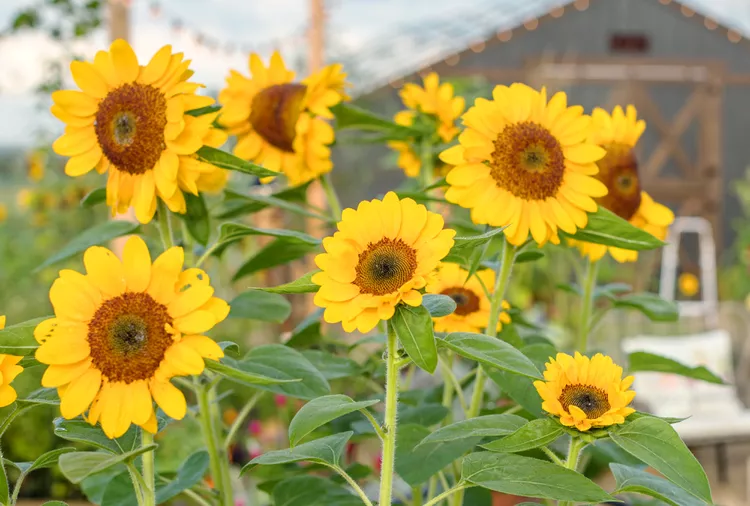
Sunflowers are the unofficial mascots of summer with their sunny, golden-yellow petals and oversized blooms. If you have these bold flowers in your garden, you may wonder, "How long does it take for sunflowers to grow their cheery blossoms?" Typically, sunflowers bloom about 70 to 100 days after seeds are planted. However, bloom times vary significantly among sunflower varieties, so knowing precisely when your sunflowers are ready to pick can be tricky. This guide covers how long it takes to grow sunflowers for seeds, cut flowers, and even microgreens.
Sunflower Lifecycle
From seed to flower, sunflowers progress through five growth stages as they mature. The exact time frame of these stages varies slightly depending on the type of sunflower.
Germination stage: Sunflower seeds take about 7 to 10 days to germinate. During this time, the shell of the sunflower seed cracks open, and the seedling begins to develop roots.
Vegetative stage: Sunflowers do most of their growth during the vegetative stage of their development, which usually occurs in May to June for seeds sown in spring. Sunflower seedlings emerge from the soil and produce their first true leaves at this stage. Sunflowers also grow their tall stalks during the vegetative stage.
Reproductive stage: After sunflowers reach a certain size, they develop flower buds. These buds slowly unfurl, revealing the sunflower’s colorful petals. This reproductive state of sunflower development occurs about 5 to 10 weeks after the seeds are sown.
Blooming stage: When sunflower buds fully open, the plant has entered the blooming stage. The blooming stage occurs about 10 to 13 weeks after sowing seeds, and it’s the best time to harvest sunflowers for cut flowers. This is also when bees and other pollinators visit sunflower blooms in search of nectar; they pollinate the plant so it can produce seeds. Typically, sunflowers bloom for about two to four weeks, but branching sunflower varieties bloom even longer.
Harvesting stage: After sunflowers bloom, their seeds begin to mature, which takes about a month. The sunflower seeds are ready for harvest when their shells are hard and the sunflower head starts to droop and turn brown. This stage usually occurs from late August through September, about 125 days after the seeds are sown.
How Long Does it Take for Sunflowers to Grow for Harvesting?
Most seed packets include “days to maturity” details. However, this information can be a bit confusing when it comes to sunflowers, as it usually refers to the time they can be harvested as cut flowers. If you’re growing sunflowers for microgreens or edible seeds, you need to harvest the crop at different times.
Harvesting Microgreens
Sunflower microgreens grow very rapidly, and they’re harvested just 8 to 14 days after the seeds germinate. Microgreens are harvested during the early vegetative stage of a sunflower’s life cycle, and since they mature so quickly, you can grow many crops of sunflower microgreens in a year.
Harvesting Flowers
The “days to maturity” information on sunflower seed packets is usually a good estimation of when non-branching sunflowers will be in full bloom and ready for cutting. Sunflowers are usually harvested for their blooms about 70 to 100 days after germination, but this varies depending on the sunflower type.
Non-branching sunflowers are the sunflowers of choice among florists, but if you’re growing branching-type sunflowers for cut flowers, the “days to maturity” information on seed packets isn’t as exact because branching sunflowers usually bloom repeatedly from midsummer to the first hard fall frost. For these sunflower varieties, “days to maturity” refers to when the sunflowers first start flowering; branching sunflowers can continue for months.
Another thing to consider is that different sunflower varieties will mature quicker than others. For example, fast-growing sunflower varieties such as ‘ProCut Red’ and ‘Ruby Eclipse’, bloom just 55 days after planting. In comparison, giant sunflower types like ‘Mammoth Grey Stripe’ can take 120 days to mature.
Harvesting Sunflower Seeds
Most seed packets don’t include information about when the sunflower seeds will be ready to harvest. Typically, sunflower seeds mature about one month after the flowers open. So, if your sunflowers bloom in August, the seeds are usually ready to harvest in September.
Sunflower seeds are fully ripe when the flower head begins to droop and turn backward on itself. Mature seed heads turn golden brown; the seeds should have nicely formed shells.
To harvest sunflowers for seeds, allow the flower heads to dry thoroughly on the plant, and then snip each one off at the top of the stem. Alternatively, if you don’t want to worry about wildlife gobbling up the seeds before you get to them, pick the sunflowers as soon as their seeds mature by cutting the plant’s stem about 1 foot below the flower head. Then, loosely bundle the sunflower stems with twine and hang them indoors until they’re completely dry.
Sunflower Growing Tips
Sunflowers are beginner-friendly plants that are easy to keep in gardens or container planters. Provide them with the proper balance of light, water, and nutrients, and the sunflowers will reward you with bright blooms and tasty seeds.
- Plant sunflowers in spring. Sunflowers should be planted in spring after the danger of frost has passed. While you can start sunflowers indoors to extend the growing season, sunflowers usually don’t transplant well, so it’s not recommended.
- Amend the soil. If you want the biggest and most productive sunflowers, amend the soil with compost or aged manure before sowing the seeds.
- Stay on top of watering. Sunflowers grow best when they receive about 1 inch of water per week.
- Try out succession planting. Succession sow sunflower seeds every two to three weeks through early to midsummer to extend the growing season and increase the harvest of sunflowers.
- Keep garden pests away. Deer, raccoons, and other critters sometimes damage sunflower crops. To prevent this, fence off the sunflowers or use companion planting to discourage pests.
- Stake tall plants. Sunflowers can be top-heavy plants, and tall varieties are particularly vulnerable to wind damage. Staking sunflowers over 3 feet tall is a good way to prevent them from toppling over in bad weather.
Recipes Using Sunflower Seeds
There are many more ways to enjoy sunflower seeds than roasting and eating them one by one. A sunflower seed and turmeric vinaigrette dressing makes a beet and radish salad even more tasty. Sunflower seeds are a must-have ingredient for these delicious Mostly Seeds Wheat Crackers. Our Quick Seed Bread is a hearty, easy-to-make staple to keep on hand for quick breakfasts or afternoon snacks. Sunflower seeds can be tossed on a green salad or roasted veggies for added crunch and nutty flavor.