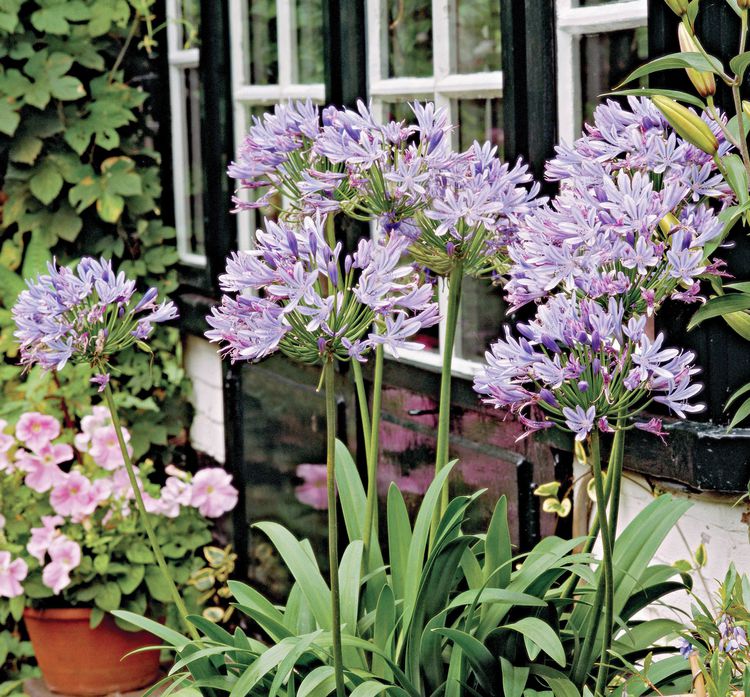
Agapanthus plants are blooming machines that you can think of as the tropical equivalent of the daylily. A landscape staple in warm-winter regions, agapanthus is a low-maintenance perennial that produces colorful clusters of blue or white trumpet-shaped flowers in summer and fall.
Agapanthus has strappy green leaves that add texture to beds, borders, and containers. Many varieties have foliage that is small and grasslike. Others have larger, straplike foliage (much like daylilies). Several varieties of agapanthus are available with green variegated foliage with a cream or white stripe down the edge.
Agapanthus blossoms appear in clusters at the tips of blooming stems. As they emerge from the foliage, the blooms are held within a tight green bract to protect them from damage. As they mature, the bracts pull back to reveal small blue buds. These buds open in succession, starting at the bottom and working their way up.
The sap of the plant is toxic to people. Agapanthus may be toxic to dogs and cats. Don't locate the plants where children and pets play.
Agapanthus Overview
| Genus Name | Agapanthus |
| Common Name | Agapanthus |
| Plant Type | Perennial |
| Light | Part Sun, Sun |
| Height | 1 to 4 feet |
| Width | 1 to 3 feet |
| Flower Color | Blue, White |
| Season Features | Fall Bloom, Summer Bloom |
| Special Features | Cut Flowers, Good for Containers, Low Maintenance |
| Zones | 10, 11, 7, 8, 9 |
| Propagation | Division, Seed |
| Problem Solvers | Deer Resistant |
Where to Plant Agapanthus
Agapanthus is cold-hardy in USDA zones 8-11, and some varieties are hardy in zone 7. Choose a location that receives full sun unless the climate is very hot; in that case, some shade is beneficial. The soil needs to be moist, rich, and well-draining. Agapanthus does well in garden beds and borders or in containers. It can handle salty winds, which makes it a particularly good choice for coastal gardens.
How and When to Plant Agapanthus
Plant bare-root agapanthus in the late fall in warm climates or in the spring after the last frost in cool climates. In the garden, plant the rhizomes 12 to 24 inches deep in moist, well-draining soil. The root crown should be facing up and positioned at soil level.
If you have a nursery plant:
- Dig a hole in the garden that is as deep as the nursery container and twice as wide.
- Loosen the soil in the bottom of the hole.
- Wear gloves to remove the plant from its container, and gently loosen the roots with your hands.
- Set it in the ground at the same level as in the container.
- Backfill the hole and press down to remove air pockets.
- Water the plant.
Spacing guidelines for multiple plants will depend on the variety you've selected. Consult the tag that comes with your plants to ensure proper placement.
Agapanthus can also be grown in containers filled with potting soil.
Agapanthus Care Tips
Light
Agapanthus plants grow best in full sun and need six to eight hours of sun a day for the best bloom production. However, in extremely hot climates, they benefit from partial shade.
Soil and Water
Choose a location with rich soil that drains well. Agapanthus plants appreciate regular watering and don't like to dry out for long. Be consistent with watering to prevent stress from hindering future blooms, especially just after the plant completes a bloom cycle.
Temperature and Humidity
Many agapanthus species are evergreen in tropical climates. The non-evergreen types require a little more protection and warmth during the cool season. As fall arrives, initiate their dormancy by withholding some water. Move the more tender evergreen varieties into a frost-free environment, like a greenhouse or near a bright window in a home. Hardier plants can be left out and sparsely watered until spring. Agapanthus can handle high humidity but does not require it.
Fertilizer
Since agapanthus plants are frequent bloomers, it's a good idea to fertilize them twice a year—in early spring and again two months later. Give them a balanced granular fertilizer such as 10-10-10 or one slightly higher in phosphorus than nitrogen to keep the blooms going all season long. For the amount to use, follow product label directions. Be sure to water it in well.
Pruning
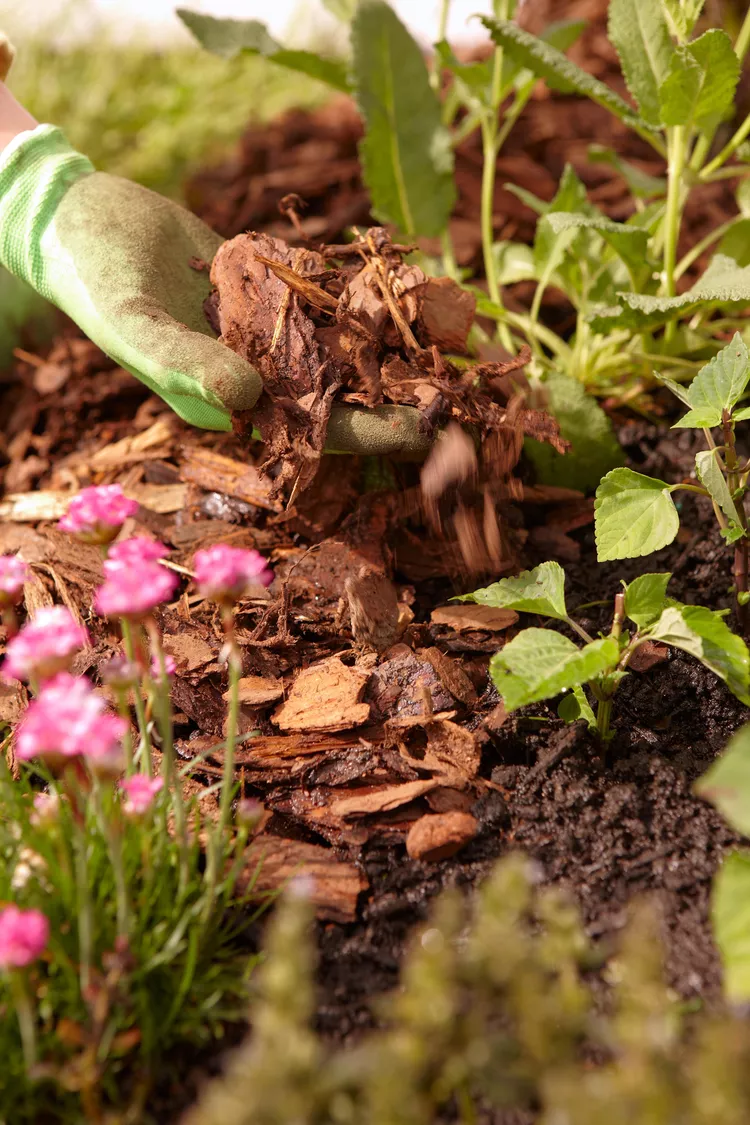
Remove damaged leaves any time of year, but leave all the others on the plant so it can store the energy it needs for the following year. For agapanthus grown in the ground, cut back the foliage to about 4 inches in late fall when blooming is over. The plant will go dormant for the winter. Mulch the crown of the plant to protect it.
During the blooming season, remove faded blossoms from the stem to encourage new growth and prevent the plant from wasting energy on seed production.
Potting and Repotting Agapanthus
A good tip for proper care of potted agapanthus is to divide the plants on a regular basis. In general, agapanthus plants don't mind being snugly planted in a pot. However, they appreciate being divided every few years to encourage new growth and increase blooms.
For one plant, start with a 12-inch pot with drainage holes and fill with moist potting soil mixed with a bit of sand. Place the plant in the container at the same level as the nursery pot and firm around it with the potting mix. Allow the plant to acclimate in a protected spot before moving it to a sunny location. Ensure that the plant receives at least a half an inch of water per week once established in the container.
Repot your agapanthus every two years or so into a container about 4 inches wider and filled with fresh potting mix.
Pests and Problems
Spider mites, mealybugs, and thrips are attracted to agapanthus plants. Wash them off with a strong spray of water or treat them with insecticidal soap or neem oil.
Root rot can become a problem if the plant sits in soggy soil. It can be prevented by planting in well-draining soil, but it can't be treated. Remove the affected plant from the garden and dispose of it.
How to Propagate Agapanthus
Agapanthus grows and spreads by fleshy rhizomes that act as storage roots. The plant retains nutrients in its roots and may be divided to create more plants. Use a sharp shovel to dig up an established plant and divide it into several sections, each with roots and foliage. Plant the sections back in the garden in well-draining soil or in containers of potting soil to give away.
If you don't have a mature agapanthus plant, you can plant seeds, but the resulting plants take two or three years to bloom. You can also buy seeds or harvest seed pods from an existing plant, keeping in mind that if the plant is a hybrid, the plants from harvested seeds won't be a match to the parent plant.
- Put harvested seed pods in a paper bag in a warm location and leave them until the pods open.
- In spring, plant them in a pot or flat with drainage holes. Use a rich planting mix with added perlite for drainage.
- Sprinkle the seeds on the planting mix and cover them with only 1/4 inch of the soil.
- Water the container and put it in a warm, sunny location.
Germination takes about a month.
Types of Agapanthus
The most common and popular flower color of agapanthus is blue (they come in several shades, with most being light or medium blue with streaks of deeper blue down the petals). Agapanthus can also be found in white; a few varieties have white and blue in the same flowers.
Agapanthus Africanus
Agapanthus africanus is a common type with blue flowers that blooms in late summer and early fall. It grows 3 feet tall and 2 feet wide. Zones 9-10
'Headbourne Hybrids' Agapanthus
Agapanthus 'Headbourne Hybrids' is a popular strain that bears flowers in shades of violet-blue. The plants grow 4 feet tall. Zones 7-10
'Peter Pan' Agapanthus
Agapanthus 'Peter Pan' is a dwarf selection that offers light blue flowers throughout the summer. It grows 1 foot tall and wide. Zones 8-11
'Snow Storm' Agapanthus
Agapanthus 'Snow Storm' is a fast-growing, floriferous selection that produces clusters of pure-white flowers in late spring and summer. It grows 30 inches tall and wide. Zones 8-10
Agapanthus Companion Plants
Society Garlic
Society garlic leaves look like chives, and if you walk by a planting of this South African native bulb and brush the foliage, you'll catch a whiff of garlic. The beautiful clusters of lavender-pink flowers have a sweet fragrance, similar to hyacinth perfume. They open up on tall stems from early summer until late fall. Noted for its drought tolerance, society garlic has become a staple in Southern California landscapes.
Kangaroo Paw
Make a bold statement in your garden with kangaroo paw. This unusual perennial comes from Australia and bears strappy green leaves and upright spikes of fuzzy flowers in radioactively brilliant colors. The blooms last a long time and make great cut flowers.
Bird of Paradise
Add tropical flair to your garden or home with stunning bird of paradise flowers. Named for their resemblance to a flamboyant tropical bird, the long-lasting blooms appear in shades of orange and white. Outdoors, they are a favorite in tropical landscapes because the plants are practically carefree—just give them a sunny spot with well-drained soil, and you'll be rewarded with the unique blooms. Indoors, they need a bright spot to produce flowers. Many gardeners take bird of paradise outside for the summer so the plants can soak up the sun.
Re-pot or divide the plants every two to three years if you grow them in a container to prevent them from becoming root-bound.