
Gardening in the South has always meant battling heat and humidity. In an age of more extreme weather, it’s more important than ever to pick plants that can stand up to tough conditions. These native plants are up to the challenge of harsh weather because they’ve thrived in it for centuries without any help from humans. These plants are low-maintenance and self-sufficient once they’re established. They'll also improve the biodiversity of your yard by attracting birds and other wildlife.
Jack LeCroy is the Regional Extension Agent for Auburn A&M and Auburn Universities Extension. Program Areas: Home grounds, gardens, and home pests.
Hardy Hibiscus
Treat yourself to the big, bold flowers of hardy hibiscus. Dinner-plate-sized flowers adorn the plants through late summer and early fall and appear in shades of red, pink, and white.
Name: Hibiscus moscheutos
Growing Conditions: Full sun and moist soil
Size: To 8 feet tall
Zones: 5-10
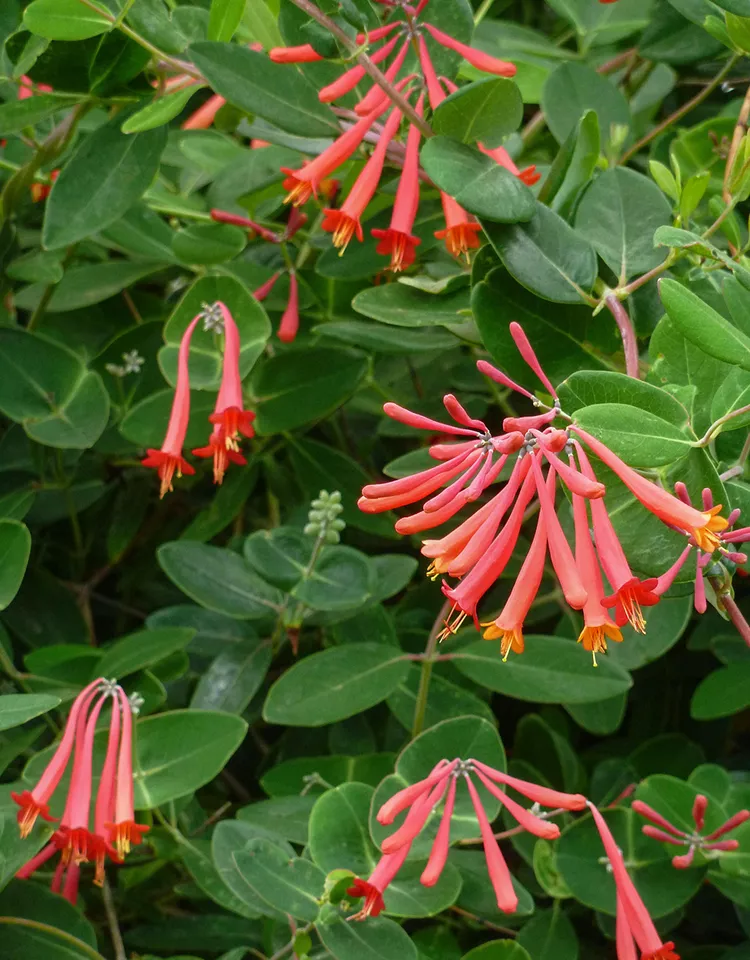
Indian Pink
A hummingbird favorite, Indian pink offers bright red flowers topped with yellow. Plant toward the front of the border and enjoy this native perennial's traffic-stopping show all season long.
Name: Spigelia marilandica
Growing Conditions: Part shade and moist, well-drained soil
Size: To 2 feet tall
Zones: 6-9
Crested Iris
This charming woodland iris bears delicate blue, white, or purple flowers in mid-spring. Even when not in bloom, the tiny clumps of foliage are a great textural contrast in the shady garden.
Name: Iris cristata
Growing Conditions: Part sun to shade and moist, well-drained soil
Size: To 1 foot tall
Zones: 3-9
Oakleaf Hydrangea
Oakleaf hydrangeas have leaves shaped like the ones on oak trees, hence the name, and they produce white panicle-shaped flowers in summer. “When an oakleaf hydrangea is in bloom it will stop anyone in their tracks,” says Jack LeCroy, regional extension agent for Auburn A&M and Auburn Universities Extension in Mobile, Alabama. “They look great planted in masses, and they brighten up any shady spot.”
Name: Hydrangea quercifolia
Size: 4 to 8 feet tall
Growing Conditions: Full sun to partial shade and average soil
Zones: 5-9
Bee Balm
Native bee balm bears bright red blooms through the summer months. It's a butterfly and hummingbird magnet—and thanks to its aromatic foliage, is usually ignored by hungry deer or bunnies.
Name: Monarda didyma
Growing Conditions: Full sun and moist, well-drained soil
Size: To 4 feet tall
Zones: 4-8
Mountain Mint
Mountain mint is a native wildflower and herb that attracts bees and butterflies thanks to its minty aroma and nectar-laden flowers. Birds love to eat its seeds, too, so this pretty plant is a wildlife magnet. LeCroy recommends Southern mountain mint in particular, calling it “a must-have for a pollinator garden.”
Name: Pycnanthemum spp.
Size: 3 to 6 feet tall
Growing Conditions: Full sun to partial shade and average soil
Zones: 4-9
Helen's Flower
This fall-blooming daisy comes in a multitude of autumnal colors, including warm golds, reds, and oranges. An easy-to-grow perennial, it's great for a shot of color at the end of the season. One top-notch selection we love is multicolored 'Mardi Gras'.
Name: Helenium autumnale
Growing Conditions: Full sun and moist, well-drained soil
Size: To 4 feet tall
Zones: 3-8
Swamp Sunflower
This tall perennial sunflower produces showy, yellow flowers from late summer to early fall. “This plant makes every gardener’s heart happy as it’s one of the last large showing of flowers that we get to see in the fall before all our plants go dormant,” LeCroy says. Swamp sunflowers like moist soil and even clay loams.
Name: Helianthus angustifolius
Size: To 8 feet tall
Growing Conditions: Full sun and moist loamy soil
Zones: 5-9
If you don’t have room for a flower as tall as an NBA player, you can get shorter cultivars of swamp sunflower like ‘First Light’ which only grows to 4 feet tall, or ‘Low Down’ that only gets 2 feet tall.
Stokes' Aster
Grow this tough perennial for its long season of bloom and easy-growing habit. The blue or lavender flowers appear continuously through summer and into fall. Top selections to watch for include 'Blue Danube', 'Peachie's Pick', and 'Mary Gregory'.
Name: Stokesia laevis
Growing Conditions: Full sun and moist, well-drained soil
Size: To 3 feet tall
Zones: 5-10
Mock Orange
The native mock orange is an underused shrub that works well as a specimen plant, massed in a border, or as a loose privacy hedge. “Mock orange trees are ones you don’t see as often but they are a true delight in the garden,” LeCroy says. “At first glance, you might think it’s a dogwood because of the flowers.” Mock orange produces fragrant white flowers in the spring that smell like orange blossoms, hence the name. They do not produce citrus fruit.
Name: Philadelphus lewisii
Size: 6 to 14 feet tall
Growing Conditions: Full sun to part shade and average soil
Zones: 4-8
Royal Catchfly
Grow this tough little perennial to satisfy yourself and the hummingbirds. It produces bright, eye-popping red trumpet flowers in mid- and late summer.
Name: Silene regia
Growing Conditions: Full sun to part shade and well-drained soil
Size: To 3 feet tall
Zones: 5-8
Northern Sea Oats
One of this ornamental grass's best features is that it tolerates light shade well. It's also beautiful: The delicate, oat-like heads provide great winter interest and add character to the garden when rustling in the breeze.
Name: Chasmanthium latifolium
Growing Conditions: Full sun to part shade and well-drained soil
Size: To 4 feet tall
Zones: 3-8
Northern sea oats can be a fast spreader, so give it lots of room or grow it where you can keep it contained.
Native Azalea
Unlike the popular landscape azaleas that hail from Asia, native azaleas originate in the southeastern United States. There are around 17 species that are indigenous to the South. Native azaleas are deciduous and have a more upright habit than the mounding-shaped evergreen azaleas. They produce showy blooms in the spring in shades of gold, yellow, peach, orange, white, and flaming red. LeCroy's favorite is Alabama azalea (Rhododendron alabamense) because its white flowers have a lemon scent. Other native azaleas to try: Florida flame azalea (Rhododendron austrinum) and Piedmont azalea (Rhododendron canescens).
Name: Rhododendron spp.
Size: 2 to 15 feet tall, depending on variety
Growing Conditions: Filtered shade and moist, well-drained soil
Zones: 4-9
Woodland Phlox
Woodland phlox has it all; it's disease resistant, doesn't mind shade, and offers blue, purple, or white fragrant springtime flowers.
Name: Phlox divaricata
Growing Conditions: Full to part sun and moist, well-drained soil
Size: To 16 inches tall
Zones: 3-8
Swamp Lily
A top marsh or water garden plant, swamp lily bears beautiful clusters of pink or white flowers from spring to fall and long, blue-green, strap-like leaves.
Name: Crinum americanum
Growing Conditions: Full sun and moist to wet soil
Size: To 4 feet tall
Zones: 8-11
Bugbane
Tall spires of white flowers in late summer into fall make bugbane an attractive accent in the shade garden. Although this perennial does best with plenty of moisture, it is also somewhat drought-tolerant. Look for selections with dark foliage that will add interest even when the plant isn't blooming.
Name: Actaea racemosa (formerly known as Cimicifuga racemosa)
Growing Conditions: Shade and moist soil
Size: To 5 feet tall
Zones: 3-8
Rain Lily
This crocus look-alike offers charming flowers in shades of red, pink, and white. They appear in autumn, giving the garden a punch of color after the long, hot season.
Name: Zephyranthes candida
Growing Conditions: Sun to part shade and moist, well-drained soil
Size: To 18 inches tall
Zones: 7-10
Sweetbay Magnolia
Sweetbay magnolia is a small native tree that produces fewer blossoms than larger varieties of magnolias, but it’s a good pick if you don’t have room for a monster bigleaf magnolia tree that can get 40 feet tall and just as wide. Sweetbay magnolia produces fragrant, creamy white flowers that turn into scarlet seed heads that birds and squirrels love to eat. It grows in most soils and can tolerate periodic flooding.
Name: Magnolia virginiana
Size: 10 to 20 feet tall
Growing Conditions: Full sun to partial shade and average soil
Zones: 5-10
Pitcher Plant
Though they're native to swampy areas, carnivorous pitcher plants are a fun choice for soggy sites. Enjoy their interesting funnel-shaped leaves and alien-like springtime flowers.
Name: Sarracenia purpurea
Growing Conditions: Full sun and moist or wet soil
Size: To 18 inches tall
Zones: 4-7
Foamflower
A charming groundcover for shady spots, foamflower produces clusters of starry flowers in early spring. For more interest, look for newer selections that have purple-marked foliage or pink-tinged flowers.
Name: Tiarella cordifolia
Growing Conditions: Shade and moist, well-drained soil
Size: To 1 foot tall
Zones: 3-8
Crossvine
Crossvine is a fast-growing evergreen vine that can scramble up fences or across the ground. Leaves are dark green in the summer and dark purple in the winter, so crossvine provides year-round color. In the spring it produces showy flowers in orange, yellow, or orange-red that last for up to four weeks. Hummingbirds love those flowers. Crossvine is the non-invasive cousin of trumpet vine, so it’s a good pick if you’re looking for a perennial flowering vine. It's drought-tolerant and can even tolerate standing water for brief periods.
Name: Bignonia capreolata
Size: 30 to 50 feet tall
Growing Conditions: Full sun and average soil
Zones: 6-9
False Indigo
False indigo is a must-have perennial for your garden. Its blue or purple flowers make a statement in late spring, and its blue-green foliage and charcoal-gray seed pods are beautiful in late summer.
Name: Baptisia australis
Growing Conditions: Full sun and well-drained soil
Size: To 5 feet tall
Zones: 3-9
Louisiana Iris
Louisiana irises are native to Southern wetlands so they're a great choice to grow in low-lying parts of your yard or along a pond, in a rain garden, or a bog garden. These irises produce flowers in shades of purple, blue, pink, yellow, red, and white in late spring to early summer.
Name: Iris spp.
Size: To 3 feet tall
Growing Conditions: Full sun to part shade and moist to wet soil
Zones: 5-9
Red Buckeye
Also known as a firecracker plant, red buckeye produces 6-inch-long clusters of deep red flowers in the spring atop glossy dark green leaves. It can grow in clay or sandy soil as well as loam and has some drought tolerance. “This is a nice small tree to add to your landscape,” LeCroy says. “Hummingbirds love the blooms, so it helps feed our feathered friends.”
Name: Aesculus pavia
Size: 25 to 30 feet tall
Growing Conditions: Full sun to partial shade and average soil
Zones: 6-9
White Fringe Tree
White fringe tree grows as a small tree or large shrub. It has glossy dark green leaves, a domed shape, and in the spring produces gorgeous 8-inch-long clusters of white fringe-like flowers. It’s a beautiful accent for a landscape. “If you are looking for a dogwood alternative, this is it,” LeCroy says.
Name: Chionanthus virginicus
Size: 12 to 30 feet tall
Growing Conditions: Full sun to part shade and average soil
Zones: 4-9
Pink Muhly Grass
This native ornamental grass adds a little late-season color when its pink plumes appear just as summer’s flowers fade. Pink muhly thrives in a wide range of growing conditions, tolerating heat, humidity, drought, and poor soil and it’s even salt-tolerant so it does well in coastal gardens.
Name: Muhlenbergia capillaris
Size: To 4 feet tall
Growing Conditions: Full sun and any soil
Zones: 5-9
White Oak
The white oak is a massive, long-lived, stately tree that, when mature, is the crown jewel of a landscape. These giants are slow-growing, so the white oak you plant today will be enjoyed by future generations. A white oak can provide cooling shade and provide a home for wildlife.
Name: Quercus alba
Size: 50 to 80 feet tall
Growing Conditions: Full sun and average soil
Zones: 3-9
Eastern Red Cedar
This aromatic evergreen has a dramatic cone shape and lovely red-gray bark. It’s a good pick for windbreaks and hedges. Eastern red cedar is tolerant of heat, poor soils, and drought and it has a deep, wide root system that can anchor it in high winds.
Name: Juniperus virginiana
Size: 40 to 50 feet tall
Growing Conditions: Full sun and average soil
Zones: 2-9
Spotted Beebalm
This perennial thrives in the dry soils of prairies, forests, and coastal plains. Spotted beebalm can take the less-than-ideal soil in your garden as well as the drought and heat that come with gardening in the South. Deer and rabbits don’t eat it, either. It produces lavender blooms in the summer that attract pollinators.
Name: Monarda punctata
Size: 1 to 4 feet tall
Growing Conditions: Full to part sun and dry soil
Zones: 4 to 9
Indian Blanket
Indian blanket takes its name from its ability to cover a sunny spot with red-centered flowers fringed in yellow like a blanket. It makes a pretty flowering groundcover and can grow almost anywhere from the desert to the beach because it tolerates poor soil, extreme heat, and drought. This blanket flower is a short-lived perennial in warm Southern climates.
Name: Gaillardia pulchella
Size: 1 to 2 feet tall
Growing Conditions: Full sun to part shade in average soil
Zones: 3-10