Your Seasonal Lawn-Care Schedule for the Midwest

22.3K
891
124
2025-10-23
Your Seasonal Lawn-Care Schedule for the Midwest

As a midwesterner, you know the seasonal extremes well. You may even look forward to your region's temperature swings. But your lawn probably doesn't love the scorching summers and frigid winters. With these contrasting conditions, it can be tough to keep your yard in its best shape. To simplify your lawn care, refer to our season-by-season guide, which tells you what to do when, and you'll be well on your way to your best lawn ever.

Spring

Maintaining Your Mower

Before you even step foot onto your lawn, tend to your mower. Bring your grass cutter in for service in early spring—that way, you'll beat the rush, and your most critical tool will be in tip-top shape when you need it. Make sure to sharpen the blades so they cut evenly and efficiently.

Starting Your Lawn from Seed

Fall is the ideal time to start a new lawn from seed. However, you can also do it in the early part of spring, which lets your grass establish itself before summer arrives. Start seeding when daytime temperatures hit the 60s.

Aerating

Compacted soil can be a major culprit behind grass that just won't thicken up. If it's difficult to stick a shovel into your soil and you have persistent bald patches, this may be your problem—and fortunately, there's an easy fix: aeration. Pulling up cylindrical plugs of soil when your grass is actively growing enables the roots to reach deeper and the soil to better absorb moisture.

Mowing

Bring out the lawn mower when your grass reaches about 3 inches tall. Keep most grasses at least 2 inches tall—this height helps it ward off weeds and withstand summer drought.

Fertilizing

A light application of lawn food in early spring will give your grass a great start to the season. Keep it light and use a slow-release or organic fertilizer. Wait to fertilize until your lawn needs mowing for the first time. Feeding your lawn too early only wastes money.

Summer

Fighting Grubs

If grubs are an issue, spread an organic grub-control product that continues to work through the season. The best time to do this is in early June.

Keep Mowing

As the summer heat settles in, your grass is probably going to slow down a little. During hot, dry periods, it may only need mowing once every two or three weeks (wait for it to grow about 3 inches tall). During cooler, moister weather patterns, mow frequently enough to keep it from reaching more than 3 inches tall; that could be every week or more than once a week.

Watering

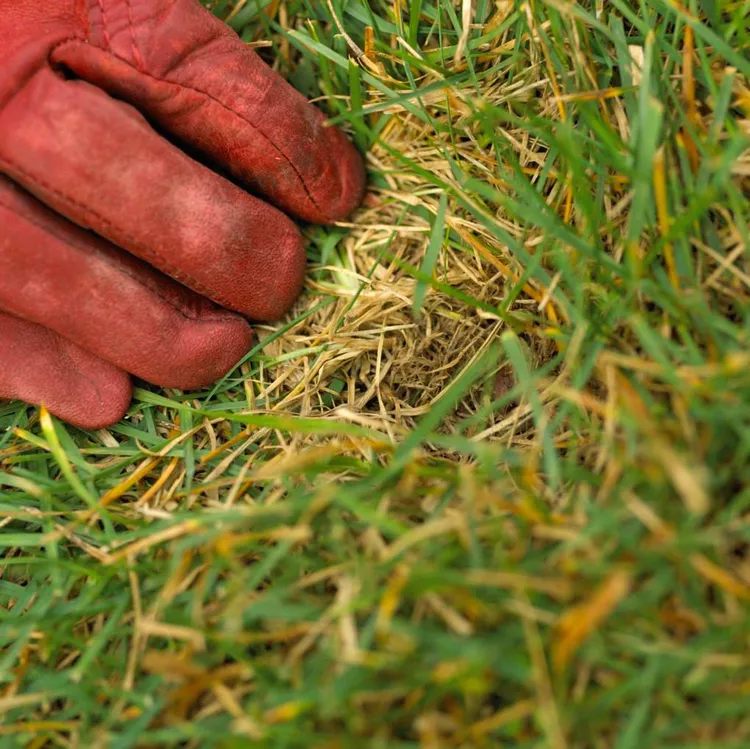
If you want to keep your water bills under control, let your grass go dormant during drought. It will turn brown, but don't worry—it's still alive. When the rains come again, it'll turn green and start growing. If you don't want a brown summer lawn, select drought-tolerant types (such as buffalo grass), or give your yard about an inch of water each week.

Fall

Fertilizing

If you only feed your lawn once a year, autumn is the best time to do it. In fact, your lawn could use a light application of fertilizer in early fall and again in late fall.

More Mowing

It seems like it never ends: As temperatures cool, your lawn will grow faster. You'll likely need to mow regularly through the end of the season.

Cleaning Up

Once you hit the height of fall, you'll need to start cleaning up the leaves, since just chopping them as you mow will leave too thick a layer and could smother your grass. If you don't have the time (or patience!) to rake, you can make several passes over your lawn with a mulching mower to more finely chop them. Repeat this every couple of weeks.

Overseeding

When is the best time to overseed lawns in the Midwest? Most grasses in this region grow best when it's under 75°F, making autumn the ideal time to overseed. Plant your new grass about a month before your average first frost so it can establish itself before the cold arrives.

Aerating

Cooler autumn temperatures mean your grass will start growing more again, so it's a great time to loosen compacted soil.

Targeting Perennial Weeds

Perennial lawn weeds are typically most susceptible to attack in fall when they're winding down and getting ready for winter. Tackle them with an organic herbicide or pull them by hand.

The last step of the year is winterizing your lawn and mower, preparing you to jump in again come spring. Then sit back and enjoy the view: Following this lawn-care schedule moves you several steps closer to a thriving lawn, and it will only become easier to maintain with each passing season.

Related Article

How to Plant and Grow Bermudagrass for a Lush Lawn
34.9K
2.4K
806

How to Plant and Grow Bermudagrass for a Lush Lawn

A turfgrass for warm climates, Bermudagrass forms a dense lawn that stands up to traffic and heat. Here's how to care for a Bermudagrass lawn.
Can You Mow Wet Grass? The Answer, Plus 7 Mowing Tips
10.7K
214
38

Can You Mow Wet Grass? The Answer, Plus 7 Mowing Tips

Wet grass, whether it’s from morning dew or relentless rain, makes lawn care challenging. Keep your turf in check with our mowing tips.
The Best Time to Add Fertilizer to Your Lawn Before Winter
40.1K
3.6K
721

The Best Time to Add Fertilizer to Your Lawn Before Winter

Cultivate a happy, healthy lawn all year long with a nutrient boost before freezing weather occurs.
5 Simple Steps for Preparing Gardens for Winter Weather
20.1K
201
86

5 Simple Steps for Preparing Gardens for Winter Weather

Follow our five-step guide to preparing gardens for winter weather, including protecting perennials, trees, and shrubs from harsh conditions.
21 Plants for Sandy Soil That Thrive in Dry Conditions
23.4K
1.2K
408

21 Plants for Sandy Soil That Thrive in Dry Conditions

Discover 21 plants that flourish in sandy soil. From vibrant flowers to hardy shrubs, find the best options for your garden.
What Every Homeowner Needs to Know About Dethatching Lawns
31.5K
944
169

What Every Homeowner Needs to Know About Dethatching Lawns

Restore your grass so it is lush and green by learning the why, when, and how of dethatching a lawn. These lawn dethatching tips will make you an expert.
How to Plant and Grow Cardinal Climber
26K
780
343

How to Plant and Grow Cardinal Climber

Cardinal climber is a fast-growing annual vine with vibrant red flowers that bloom all summer. Learn how to grow it here.
How to Plant and Grow Serviceberry
32.7K
981
176

How to Plant and Grow Serviceberry

Discover essential tips for growing serviceberry, a flowering tree with edible berries that is one of spring's first sources of nectar.
11 of the Best Flowering Vines for Shade
24.9K
1.7K
696

11 of the Best Flowering Vines for Shade

Brighten up your shady garden with these vining plants that have beautiful flowers.
5 Best Raised Bed Garden Layouts—and How to Choose the Right One for Your Space
33.7K
1.7K
370

5 Best Raised Bed Garden Layouts—and How to Choose the Right One for Your Space

Designers share their favorite raised bed garden layouts for all kinds of spaces and gardeners.
5 Smart Solutions for Dealing with Poor Drainage in Your Yard
47.7K
2.4K
620

5 Smart Solutions for Dealing with Poor Drainage in Your Yard

Find out how to improve drainage in soil so that you can grow your garden plants. Or, if you can't, learn how to fix the soil that doesn't drain so that you can still enjoy colorful flowers.
How to Plant a Water Lily in a Container to Brighten Up Your Pond
18.6K
556
100

How to Plant a Water Lily in a Container to Brighten Up Your Pond

This aquatic plant looks beautiful in water gardens large and small. Plant waterlilies in a container by following these easy step-by-step instructions.
How to Plant and Grow Haworthia
38.8K
3.1K
901

How to Plant and Grow Haworthia

Discover how to care for members of the genus Haworthia as houseplants or outdoors. Learn about proper lighting, fertilizing, and heat as well as how to propagate these fascinating little succulents.
How to Grow and Care for Indoor Cyclamen
18.7K
749
104

How to Grow and Care for Indoor Cyclamen

Florist’s cyclamen have a reputation for being tricky to grow but this guide will help you keep these plants blooming in winter and then rebloom year after year indoors.
How to Get Orchids to Rebloom with These 5 Must-Know Tips
32.9K
1.6K
164

How to Get Orchids to Rebloom with These 5 Must-Know Tips

Find out what to do with moth orchids after they bloom and get them to rebloom year after year.
How to Propagate a Rubber Plant Successfully
28.1K
1.7K
725

How to Propagate a Rubber Plant Successfully

Learn how to propagate rubber plants through cuttings and air layering with this step-by-step guide.
How to Arrange Plants In Your Living Room to Add Natural Style
14.9K
148
28

How to Arrange Plants In Your Living Room to Add Natural Style

Here are tips for how to arrange plants in your living room and how to care for them to bring new life to your home's decor.
Top Plants for Florida Landscaping and Gardens
49.5K
494
207

Top Plants for Florida Landscaping and Gardens

The tropical environment means top plants for Florida will thrive and grow, adding lush, green bulbs, trees and perennials to landscapes and gardens.
Is Electroculture Gardening the Next Great Thing in Plant Care?
34.6K
3.1K
778

Is Electroculture Gardening the Next Great Thing in Plant Care?

Electroculture gardening harnesses atmospheric energy to naturally and organically promote plant growth. Learn what electroculture gardening is, plus how you could try it at home.
Can You Plant Garlic in the Spring? With These Must-Know Tips, You Can
37.1K
3.3K
600

Can You Plant Garlic in the Spring? With These Must-Know Tips, You Can

Even if you missed the fall planting window, here's how you can plant garlic in spring and still get tasty greens and bulbs to eat.