8 Must-Know Tips for Watering Poinsettias So They Last All Season

21.2K
1.1K
243
2025-10-29
8 Must-Know Tips for Watering Poinsettias So They Last All Season

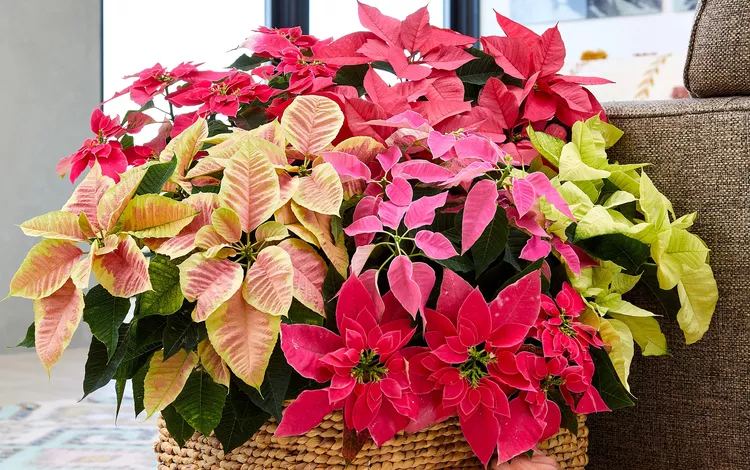
It’s a sure sign the holiday season is here when poinsettias fill florist shelves, grocery store endcaps, and greenhouses at big box stores. These lush tropical plants look fabulous at the time of purchase but often take on a sickly appearance a few days later. Improper watering is usually the culprit.

Poinsettias are sensitive to too much or too little water and quickly show signs of stress in the form of yellow leaves and bare lower branches. These 8 smart watering tips will keep your poinsettias looking good until you ring in the new year.

1. Start with a healthy plant.

When shopping for a poinsettia, resist the urge to rescue a bedraggled plant. Poinsettias that have had a rough journey to the marketplace might have broken stems, limp or curled leaves, and limited foliage at the base of the plant. In general, these tender tropicals don’t recover quickly and will likely look less-than-festive for the duration of the holiday season. 

Instead, search out a poinsettia with lush, brightly colored leaves and flowers—the button-like structures in the center of the leaf clusters—that are barely open and shedding no pollen. A healthy poinsettia easily keeps its good looks for six weeks or more. 

2. Check the soil moisture daily.

Yes, daily. When soil is dry to the touch, it’s time to water. Poinsettias thrive when their soil is allowed to just barely dry out between waterings. Your goal is to water the plant the day the soil surface is dry to the touch. 

Poinsettias are usually grown in a soilless mix that dries out rapidly because that type of soil most closely mimics their native soil. Poinsettias are tropical plants heralding from regions with light, sandy soil and frequent rain showers. Replicate these conditions in your home, and the poinsettia will be happy. 

3. Remove the cover before watering.

Poinsettias despise soggy soil. When poinsettias are watered in their decorative covers, the excess water pools in the bottom of the cover, creating waterlogged soil. Before watering your plant, slip it out of the decorative plastic or paper cover. Replace the cover after all excess moisture has drained out of the pot.  

4. Let your poinsettia soak.

An easy way to ensure poinsettias receive ample moisture at watering time is to set the plant—removing the decorative pot cover first—in a baking pan or shallow tray. Then, water the plant with room temperature water until the excess water runs out of the bottom of the pot. Leave the pot in the tray for 15-30 minutes. It will absorb any needed water that collects in the bottom of the tray.

5. Don’t leave water in the cover.

After letting your poinsettia soak, it's best to set your plant in a sink where any excess water can drip out before returning the pot to the decorative cover. Or if you want to just put it back in the cover, check back a little while later and dump out any unneeded water to prevent the plant’s soil from becoming waterlogged. The same applies if you use a saucer under your plant's pot instead of a cover.

6. Avoid nearby heat sources.

Vents, radiators—anything that is moving warm air—will cause the soil of nearby poinsettias to dry out more quickly. If possible, place your poinsettia near a sunny window, away from heat sources. Poinsettias thrive when the air temperature is 60°F to 70°F, and you won't have to water it quite as much.

7. Watch for yellow leaves.

Overwatering causes leaves on the bottom of the plant to turn yellow and drop off. In time, the lower half of the plant becomes a bunch of leafless stems. At the first sight of a yellow leaf, check the soil moisture. Do not water the plant until the soil surface is dry to the touch. Also, check the decorative pot cover to ensure excess water has not collected in the bottom, causing soggy soil. 

8. Don't let your poinsettia wilt.

Poinsettias are quick to let you know when they desperately need water. Their leaves will look curled and droopy. Unfortunately, when poinsettias reach this point, their growth is often so compromised that it is difficult to return them to full health. While it's best to avoid letting your plant wilt even a little bit, if this does happen, water your stressed poinsettia as soon as you notice the problem, following the watering practices described above.

Related Article

How to Plant and Grow Bermudagrass for a Lush Lawn
34.9K
2.4K
806

How to Plant and Grow Bermudagrass for a Lush Lawn

A turfgrass for warm climates, Bermudagrass forms a dense lawn that stands up to traffic and heat. Here's how to care for a Bermudagrass lawn.
Can You Mow Wet Grass? The Answer, Plus 7 Mowing Tips
10.7K
214
38

Can You Mow Wet Grass? The Answer, Plus 7 Mowing Tips

Wet grass, whether it’s from morning dew or relentless rain, makes lawn care challenging. Keep your turf in check with our mowing tips.
The Best Time to Add Fertilizer to Your Lawn Before Winter
40.1K
3.6K
721

The Best Time to Add Fertilizer to Your Lawn Before Winter

Cultivate a happy, healthy lawn all year long with a nutrient boost before freezing weather occurs.
5 Simple Steps for Preparing Gardens for Winter Weather
20.1K
201
86

5 Simple Steps for Preparing Gardens for Winter Weather

Follow our five-step guide to preparing gardens for winter weather, including protecting perennials, trees, and shrubs from harsh conditions.
21 Plants for Sandy Soil That Thrive in Dry Conditions
23.4K
1.2K
408

21 Plants for Sandy Soil That Thrive in Dry Conditions

Discover 21 plants that flourish in sandy soil. From vibrant flowers to hardy shrubs, find the best options for your garden.
What Every Homeowner Needs to Know About Dethatching Lawns
31.5K
944
169

What Every Homeowner Needs to Know About Dethatching Lawns

Restore your grass so it is lush and green by learning the why, when, and how of dethatching a lawn. These lawn dethatching tips will make you an expert.
How to Plant and Grow Cardinal Climber
26K
780
343

How to Plant and Grow Cardinal Climber

Cardinal climber is a fast-growing annual vine with vibrant red flowers that bloom all summer. Learn how to grow it here.
How to Plant and Grow Serviceberry
32.7K
981
176

How to Plant and Grow Serviceberry

Discover essential tips for growing serviceberry, a flowering tree with edible berries that is one of spring's first sources of nectar.
11 of the Best Flowering Vines for Shade
24.9K
1.7K
696

11 of the Best Flowering Vines for Shade

Brighten up your shady garden with these vining plants that have beautiful flowers.
5 Best Raised Bed Garden Layouts—and How to Choose the Right One for Your Space
33.7K
1.7K
370

5 Best Raised Bed Garden Layouts—and How to Choose the Right One for Your Space

Designers share their favorite raised bed garden layouts for all kinds of spaces and gardeners.
5 Smart Solutions for Dealing with Poor Drainage in Your Yard
47.7K
2.4K
620

5 Smart Solutions for Dealing with Poor Drainage in Your Yard

Find out how to improve drainage in soil so that you can grow your garden plants. Or, if you can't, learn how to fix the soil that doesn't drain so that you can still enjoy colorful flowers.
How to Plant a Water Lily in a Container to Brighten Up Your Pond
18.6K
556
100

How to Plant a Water Lily in a Container to Brighten Up Your Pond

This aquatic plant looks beautiful in water gardens large and small. Plant waterlilies in a container by following these easy step-by-step instructions.
How to Plant and Grow Haworthia
38.8K
3.1K
901

How to Plant and Grow Haworthia

Discover how to care for members of the genus Haworthia as houseplants or outdoors. Learn about proper lighting, fertilizing, and heat as well as how to propagate these fascinating little succulents.
How to Grow and Care for Indoor Cyclamen
18.7K
749
104

How to Grow and Care for Indoor Cyclamen

Florist’s cyclamen have a reputation for being tricky to grow but this guide will help you keep these plants blooming in winter and then rebloom year after year indoors.
How to Get Orchids to Rebloom with These 5 Must-Know Tips
32.9K
1.6K
164

How to Get Orchids to Rebloom with These 5 Must-Know Tips

Find out what to do with moth orchids after they bloom and get them to rebloom year after year.
How to Propagate a Rubber Plant Successfully
28.1K
1.7K
725

How to Propagate a Rubber Plant Successfully

Learn how to propagate rubber plants through cuttings and air layering with this step-by-step guide.
How to Arrange Plants In Your Living Room to Add Natural Style
14.9K
148
28

How to Arrange Plants In Your Living Room to Add Natural Style

Here are tips for how to arrange plants in your living room and how to care for them to bring new life to your home's decor.
Top Plants for Florida Landscaping and Gardens
49.5K
494
207

Top Plants for Florida Landscaping and Gardens

The tropical environment means top plants for Florida will thrive and grow, adding lush, green bulbs, trees and perennials to landscapes and gardens.
Is Electroculture Gardening the Next Great Thing in Plant Care?
34.6K
3.1K
778

Is Electroculture Gardening the Next Great Thing in Plant Care?

Electroculture gardening harnesses atmospheric energy to naturally and organically promote plant growth. Learn what electroculture gardening is, plus how you could try it at home.
Can You Plant Garlic in the Spring? With These Must-Know Tips, You Can
37.1K
3.3K
600

Can You Plant Garlic in the Spring? With These Must-Know Tips, You Can

Even if you missed the fall planting window, here's how you can plant garlic in spring and still get tasty greens and bulbs to eat.