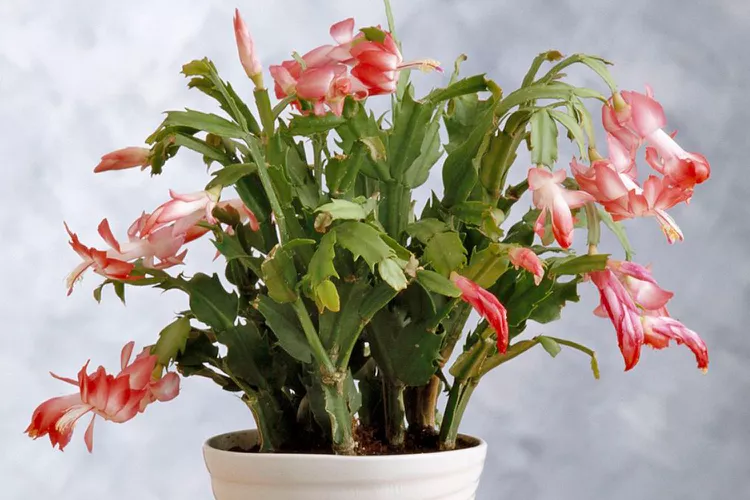
Propagating your Christmas cactus (Schlumbergera spp.) is almost as easy as caring for these low-maintenance houseplants that bloom in the winter. These succulents will root fairly easily from cuttings. Whether you want to add more Christmas cacti to your collection, share with friends, or simply salvage a broken plant stem, the tips below will teach you how to propagate Christmas cactus plants.
Several plants are referred to as Christmas or holiday cacti, but these plants all have similar care needs and are easy to propagate.
Christmas Cactus Propagation Tips
Like many other houseplants, Christmas cacti can be propagated using both soil and water propagation methods. However, you'll get the best results by starting with healthy Christmas cactus cuttings and propagating the plants at the right time of year.
- Avoid propagating plants when they’re actively flowering because blooming plants have less energy for root development.
- Cuttings usually root best if they’re taken when the plants are actively growing new leaves in late spring.
Propagating Christmas Cactus in Water
Rooting Christmas cacti in water is a bit easier than in soil because you can see how the roots of your cuttings are developing in the water. Choose clear plant propagation jars, vases, or bottles, and sterilize the containers with a 10% bleach solution to keep your cuttings healthy.
Step 1: Take several stem cuttings from a healthy Christmas cactus plant using clean shears or scissors, or gently break off the cuttings with your fingers. Long stem cuttings are often too top-heavy to stay upright in plant propagation jars, so take cuttings that are only 2 to 5 leaf segments long.
Some stem cuttings may not root properly, so taking a few more cuttings than you think you need is a good idea.
Step 2: Place the stems in a clear glass jar or vase filled with about 1 inch of fresh water. Add some clean gravel to the propagation jars to keep the cuttings upright if needed. Make sure that the bottom tip of each stem cutting is submerged in the water, and then move the container with cuttings onto a windowsill or other sunny location that receives bright, indirect light.
Step 3: Be patient. Christmas cactus cuttings take 6 to 8 weeks to develop roots. During this time, check the cuttings often and refresh the water when it runs low or becomes cloudy.
Step 4: After several weeks, the cuttings should develop small, thread-like, white roots. Once those roots are about 1 inch long, plant the cuttings about 1 inch deep in a pot filled with a well-draining potting mix intended for succulents and cacti. Gently firm the soil around the cuttings to keep them upright and water them in. Move your new Christmas cactus plants into bright, indirect light, and care for them as usual.
For a fuller plant look, pot several Christmas cactus cuttings together in a single pot, making sure to space the cuttings at least 1 inch apart.
Propagating Christmas Cactus in Soil
Whether you propagate plant cuttings in soil or water is a matter of personal preference. The main perk of soil propagation is that you won’t need to repot the cuttings later if you root them in an appropriately sized pot.
Step 1: Take several healthy stem cuttings from established Christmas cactus plants. Each cutting should have 2 to 5 leaf segments and be clipped off with clean shears or scissors or gently broken off with your fingers between two leaf segments.
Breaking off Christmas cactus cuttings where two leaf segments meet tends to work best since it causes less damage to individual leaf segments.
Step 2: Place the cuttings in a warm, dark place overnight to allow the cut ends of the Christmas cactus stems to form a callus, which reduces the chances that the cuttings will rot when they’re planted in soil.
Step 3: Plant the cuttings in pots with plenty of drainage holes. Use a well-draining potting mix intended for succulents and cacti and bury each cutting so the bottom half with the lowest one or two leaf segments is buried in the soil. If you don’t want to repot the cuttings later on, use a large enough pot to accommodate all the cuttings and space them at least 1 inch apart.
Step 4: Move the potted cuttings to a windowsill that receives bright, indirect light, and water the cuttings sparingly so that the soil stays moist but not soggy. Christmas cactus cuttings take about 6 to 8 weeks to root in soil.
If you notice any cuttings shriveling in the soil, pull them out and compost them since they aren’t rooting correctly.
Step 5: When the cuttings have developed sturdy roots, keep them in their original growing pot or repot them into individual containers. If you repot the cuttings, choose pots with drainage holes and use a potting mix for succulents and cacti. Plant cuttings about 1 inch deep and water them well to help the plants settle into their new pots.
Cuttings can also be rooted in perlite or coarse sand and then repotted into individual pots once they’ve developed roots. This approach can be more cost-effective than rooting cuttings in a succulent potting mix.
Caring for Your New Christmas Cactus Plants
After repotting your new Christmas cactus plants in soil, care for the new plants as you care for older Christmas cactus plants.
- Place the plants in bright, indirect light.
- Provide plants with about 1 inch of water per week during the growing season and reduce the watering in winter.
- Fertilize plants with an organic, liquid fertilizer diluted to half strength during the growing season.
- Boost humidity with a humidifier or pebble tray.