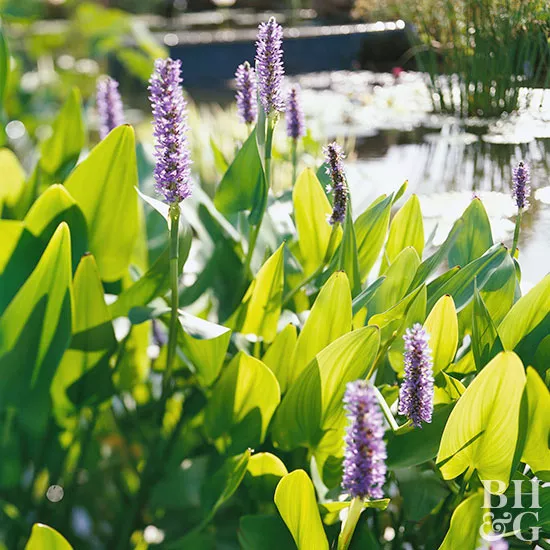
Quiet ponds and wetlands are ideal growing spots for low-maintenance and easy-to-grow pickerel weed (Pontederia cordata). The perennial aquatic plant features glossy, lance-like blue-green leaves with 2- to 5-inch-wide heart-shape bases that provide a lush backdrop for the plant's flower spikes. The 6-inch-long flowers, which bloom from the bottom up, decorate the plant nonstop from summer through fall.
Pickerel weed is pretty, but it is also practical. For one, it beckons winged visitors to the garden and provides a valuable nectar source for bees and butterflies. Pickerel weed stems are also a favorite spot for dragonflies and damselflies (which are excellent at keeping mosquitos and gnats in check) to lay their eggs. What’s more, pickerel weed is an emergent plant. That means it’s rooted in the soil beneath the water’s surface with sturdy stems, leaves, and flowers that extend above the water's surface. These stems and leaves provide necessary shelter for fish and other aquatic animals.
Pickerel Weed Overview
| Genus Name | Pontederia cordata |
| Common Name | Pickerel Weed |
| Additional Common Names | Pickerelweed, Pickerel Rush |
| Plant Type | Water Plant |
| Light | Sun |
| Height | 1 to 3 feet |
| Width | 1 to 2 feet |
| Flower Color | Purple |
| Foliage Color | Blue/Green |
| Season Features | Fall Bloom, Summer Bloom |
| Special Features | Attracts Birds, Low Maintenance |
| Zones | 10, 3, 4, 5, 6, 7, 8, 9 |
| Propagation | Division |
| Problem Solvers | Groundcover |
Where to Plant Pickerel Weed
Pickerel weed grows best in full sun and shallow freshwater (up to 12 inches deep). It thrives in boggy, wet soil and grows best when submerged in at least 3 to 5 inches of water. In optimal conditions, pickerel weed will spread readily; so be mindful of surrounding regions where you don't want the perennial to travel. If spreading is a concern, plant pickerel weed in a water container garden or container submerged just to the base of the broad leaves.
Use pickerel weed to draw in pollinators along the edge of a marsh, pond, or stream that serves as a gateway to your garden. Add color and interest by pairing it with other aquatic and semi-aquatic plants that thrive in still or slow-moving water—like swamp milkweed, cardinal flower, pitcher plant, and yellow flag iris.
How and When to Plant Pickerel Weed
The process for planting pickerel weed in containers or near a body of water is very much the same and is best done in spring. Before planting, loosen the soil in the area you wish to plant and soak your pickerel weed. Dig a hole just large enough for your plant's roots in muddy soil and place the plant snuggly in the hole. If you are planting more than one pickerel weed plant, place them about 4 feet apart. Compress the soil to remove air pockets and use small stones to hold the roots in place, if necessary.
If you plan to plant your pickerel weed in a container water garden or submerge it in a container, consider using a fabric plant pot. This will keep the plant and growing medium contained while also allowing moisture and oxygen to flow freely to the roots.
Pickerel Weed Care
Pickerel weed grows best in full sun at the margin of a pond or in a wetland. It self-seeds and spreads easily, so make sure you contain it or plant it in an area where you want the perennial to flourish.
Light
Pickerel weed is an adaptive and tolerant plant, but it can't handle full shade. It grows best in full sun and only occasional shade.
Soil and Water
Pickerel weed prefers rich, boggy, loamy soils with moderate to slightly acidic pH, but the easy-to-grow aquatic plant can also tolerate poor and alkaline soil as long as it is sufficiently wet.
The perennial grows best in just a few inches of water, but will also thrive in water as deep as 12 inches and can survive occasional flooding. It is not drought-tolerant.
Temperature and Humidity
Pickerel weed is hardy in zones 3-10 and can withstand temperatures as low as -15˚ Fahrenheit and as high as 95˚ before the plant suffers damage. The ideal temperature range for pickerel weed is between 65˚ and 90˚ Fahrenheit with water temperatures between 68˚ and 75˚.
Pickerel weed also prefers a boggy climate and can tolerate high levels of humidity.
Fertilizer
Pickerel weed does not require fertilization—especially when grown in nutrient-rich soil. If the soil is particularly poor or it seems like growth is weak, apply a slow-release, balanced fertilizer in early spring.
Pruning
Pickerel weed is a low-maintenance plant and rarely needs pruning. Remove any dead or decaying foliage to maintain plant health and appearance and cut stems back as needed in late fall to prevent excessive debris in lined ponds and streams.
Potting and Repotting
To plant pickerel weed in a water container garden, choose a container with no drainage holes—like a galvanized tub or large ceramic pot. Make sure it is water-tight and at least 6 inches deep. Choose a sunny location and line the bottom of the container with bricks. Plant your pickerel weed in a fabric pot and secure it on one of the bricks in your water garden. Ideally, your pickerel weed's soil should remain moist, but the majority of the leaves should sit above the surface of the water.
If your pickerel weed outgrows its container, dig up the plant and divide it by cutting the roots into even sections. This is best done in early spring. You can replant the divided sections into separate containers or discard the ones you don't want.
Pests and Problems
Pickerel weed is not prone to serious pest or disease issues.
How to Propagate Pickerel Weed
Pickerel weed will self-seed and spread on its own, but you can easily propagate it yourself via division. Simply dig up and divide the rhizomes in late winter or early spring. Use sharp shears or a knife to cut the roots into multiple parts, each with a healthy collection of rhizomes and leaves. Replant the divided sections at least 4 feet apart.
Types of Pickerel Weed
Common Pickerel Weed
Common pickerel weed is hardy in zones 3-10 and bears soft purple-blue flowers from June to midfall. It is a showy aquatic perennial that is beloved by butterflies, bees, dragonflies, fish, and other wildlife.
'Alba' Pickerel Weed
White pickerel weed (Pontederia cordata 'Alba') is hardy in zones 5-11 and bears white flowers instead of purple flowers.
Pink Pickerel Weed
Pink pickerel weed (Pontederia Cordata ‘Pink Pons’) is hardy in zones 4-9 and offers soft lavender-pink blooms from spring to fall. It is slightly more shade-tolerant than common pickerel weed.
'Sunsplash' Pickerel Weed
Pontederia cordata ‘Sunsplash’ is a rare cultivar of pickerel weed that has yellow and green variegated leaves and flower stalks that bloom light blue to purple throughout the summer.
Companion Plants for Pickerel Weed
Common planting partners for pickerel weed in bogs and shallow water include cattail, arrowhead, and yellow flag iris. These plants, along with pickerel weed, grow well with up to 3 inches of water over their growth point. Good plant partners for deep water include water lily and lotus.
Swamp Milkweed
Pretty swamp milkweed (Asclepias incarnata) is a long-blooming, native perennial with delightful rosy pink blooms. Like pickerel weed, it's also a known favorite of butterflies and grows easily in wet sites along streams, ponds, or bogs. Swamp milkweed grows about 4-6 feet tall in zones 3-8 and can handle a variety of soil types.
Marsh Marigold
For a colorful addition to the understory of pickerel weed, consider marsh marigold. The sunny perennial (which is technically a buttercup and not a marigold) is native to the marshes, swamps, and wet meadows of North America from Newfoundland to North Carolina. It grows about 8 to 12 inches tall in zones 3-7.
Cardinal Flower
Cardinal flower (Lobelia cardinalis) is hardy in zones 2-8. Like pickerel weed, it has upright stems and long, lance-shape dark green leaves—but cardinal flower can grow as tall as 5 feet. It bears brilliant red flowers (that are beloved by pollinators) in late summer and is often found in wet, marshy areas, along streambanks, and in wet open woods.