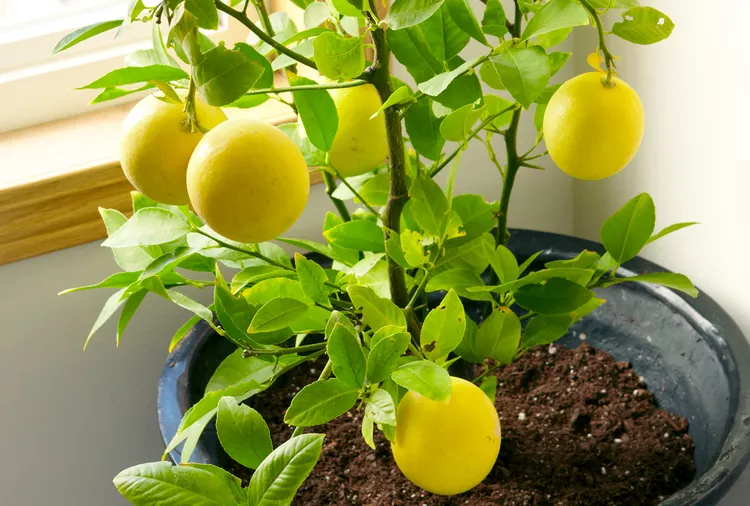
Learning how to grow a lemon tree from seed is easy. Lemons make standout potted plants with deep green, shiny leaves, amazingly fragrant flowers, and bright yellow mature fruits. This step-by-step guide explains how to grow a lemon tree from seed and provides tips for caring for your new seedling.
Steps for How to Grow a Lemon Tree from Seed
Growing lemons (or any citrus, for that matter) from seed is an easy project for all ages and experience levels. Because many types of citrus are hybrids, keep in mind that seedlings will likely be different from their parent trees, with potentially different growth habits, colors, and flavors, but the unknown is part of the fun. Follow these simple steps to grow lemons from seed:
Step 1: Select a lemon.
The first step to growing lemons from seed is selecting the type of lemon you want to grow. Purchase lemons at the market, choosing those with a full, mature appearance and free of blemishes, cuts, and bruising, which can signify internal rot.
Step 2: Remove and rinse the seeds.
Carefully remove the seeds from the fruit. Instead of cutting through the lemon, peel it like an orange to avoid piercing the few seeds that might be present. Citrus seeds have a hard outer seed coat, but they can easily be sliced by a knife or other utensil. Using your hands, split open the individual slices, remove the seeds, and place them in a cup of water. Rinse the seeds and set them on a towel to dry before planting.
Step 3: Plant the seeds.
Fill seed trays or small plastic pots—plastic holds more moisture than clay—with well-draining potting soil and water lightly so the soil is moist but not soaking wet. Use your index finger or a pencil to poke a hole roughly a half-inch deep and place one seed in each hole. Cover the seeds with soil and gently water without disturbing the seeds.
Step 4: Choose a warm, well-lit location.
Place planted seeds in a warm, well-lit location and keep the soil moist at all times. Adding a horticultural heating mat and grow lights will help the seeds germinate quickly and the seedlings grow rapidly.
Step 5: Transplant the seedlings.
After the seedlings have produced their third set of leaves, transplant them to larger containers to allow their roots to expand and grow with fewer restrictions. Keep the containers indoors under grow lights or outdoors in full sun for good growth and to prevent diseases. Full sun is at least six hours a day of direct sunlight, often on the south-facing side of a yard.
Caring for a Lemon Tree
Grown primarily in tropical, subtropical, and Mediterranean climates, lemons do best in warm, humid conditions. These tips will help you care for your new lemon tree seedling.
Soil
Lemon trees prefer well-draining soil. They can easily succumb to root rot if allowed to sit in soggy soils. For best results indoors, plant the lemon seedlings in a lightweight, well-draining potting mix or add pumice, perlite, or sand to a standard soil mix to ensure good drainage.
Soils containing high amounts of peat moss work well for retaining water, but once dry, they become hydrophobic and resistant to reabsorbing water. Furthermore, peat-based soils tend to hold too much water and, without adding pumice, perlite, or sand, can rot the plants.
Water
Like most citruses, lemons enjoy ample water but can suffer when given too much. When watering the lemons, water deeply, and make sure that the soil is thoroughly moistened each time you water the plants. It’s best to water as needed when the soil becomes dry rather than follow a weekly schedule. Heating, air conditioning, and fans affect how quickly the soil dries out.
Pests
Outdoors, lemon trees are exceptionally hardy and mostly pest-free, but indoors, they can be targeted by various pests, such as mealybugs. Aphids, mites, and white flies are other pests that can affect citrus plants. Most pests can be managed with proper dosing of an organic pesticide such as neem oil, insecticidal soap, or pyrethrin. Always follow the instructions listed on each product, and never spray when beneficial insects like bees and ladybugs are present.
Scale insects often attack lemon trees, both indoors and out. While somewhat difficult to treat, scale can be dealt with by mechanical and chemical means. Because of the soft shells and immobility, scale can be easily wiped off with your fingers. Scale (and other insects) can also be removed with a strong spray of water. However, try a small portion of the plant first and adjust the intensity of the spray accordingly to avoid damaging the plant.
Chemicals can be used for especially bad outbreaks of scale, but extra care must be taken if the fruit is later to be eaten. Also, never apply chemicals when beneficial insects that boost the health of plants, including flies, parasitic wasps, dragonflies, lacewings, and others, are around. These insects can keep more damaging predators away.
Types of Lemons
Long a staple of American cuisine, lemons and their characteristic sour zing appear in meals, drinks, and citrus-forward desserts. Several cultivars (cultivated varieties) of lemons are available for eating and ornamental purposes inside and outside the home. Here are four types of lemons you might encounter in the grocery store and at nurseries.
‘Eureka’ Lemon
Eureka lemons (Citrus limon ‘Eureka’) look like a standard grocery market lemon with bright yellow rind when fully ripe. They are great for juicing due to their thin skin and mostly seedless pulp. Large, tart fruits are produced along with flowers nearly year-round, making them exceptionally productive.
‘Variegata’ Lemon
Discovered as a mutant of the Eureka lemon in Southern California, this variegated cultivar (Citrus limon ‘Variegata’) has variegated foliage and produces fruits with pink pulp somewhat similar to a grapefruit and beautiful yellow and green striping on the rind. This cultivar makes an excellent container plant for its added color throughout.
Meyer Lemon
This popular fruit is a hybrid between a mandarin orange and a lemon. Found growing in China, it was imported to the United States in the early 1900s and exploded in popularity due to its less acidic and sweeter flavor. Meyer lemons (Citrus x meyeri) are very hardy and can survive in USDA Zone 9 without protection or extra care.
While Meyer lemons quickly became popular, they are susceptible to a devastating virus. Improved Meyer lemons (Citrus x meyeri ‘Meyer Improved’) were developed by the University of California in the 1970s and are resistant to the virus. Improved Meyer lemons have the same sweeter, less acidic flavor as Meyer lemons.
‘Lisbon’ Lemon
Like Eureka lemons, the Lisbon Lemon (Citrus limon ‘Lisbon’ produces very acidic fruits often found in grocery stores. It is excellent for juicing due to its thin, smooth skin and high juice content with few seeds.