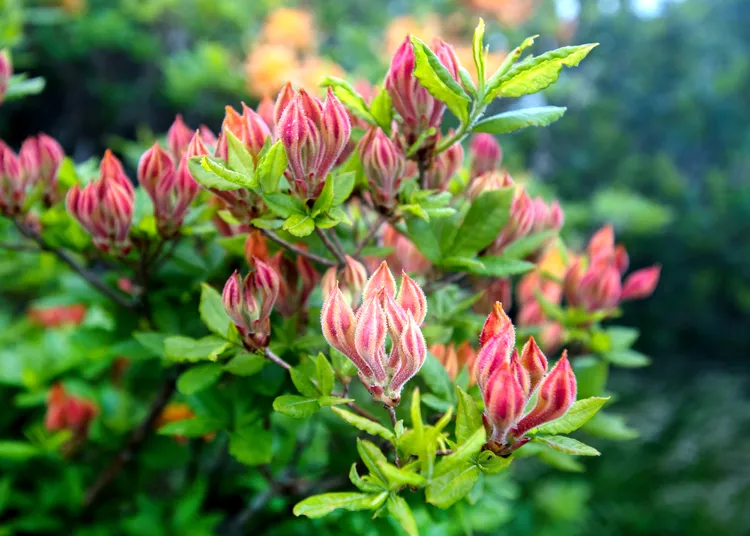
Flame azalea (Rhododendron calendulaceum) is among the most spectacular North American native shrubs you can grow. It lights up the spring garden with its colorful blooms and shines brightly in the fall with its brilliant foliage. It attracts butterflies, hummingbirds, and other pollinators.
Flame azalea’s common name refers to the resemblance of its colorful, upright flower buds to candle flames. With all its assets, it’s not surprising that flame azalea been used to create many hybrid selections of deciduous azaleas, but the native species is a knockout on its own. Use these tips to grow flame azaleas in your garden.
Flame Azalea Overview
| Genus Name | Rhododendron calendulaceum |
| Common Name | Flame Azalea |
| Plant Type | Shrub |
| Light | Part Sun, Shade, Sun |
| Height | 4 to 20 feet |
| Width | 6 to 10 feet |
| Flower Color | Orange, Red, Yellow |
| Foliage Color | Blue/Green |
| Season Features | Colorful Fall Foliage, Spring Bloom, Summer Bloom |
| Special Features | Attracts Birds, Low Maintenance |
| Zones | 5, 6, 7, 8, 9 |
| Propagation | Layering, Seed, Stem Cuttings |
| Problem Solvers | Slope/Erosion Control |
Where to Plant Flame Azalea
Choose a location that has acidic soil and excellent drainage for flame azaleas. Amend heavy soil with organic matter and adjust the pH to 4.5–6.0 before planting. The optimum light conditions are sun-dappled shade or open shade. While the shrub will grow in full shade, it produces fewer flowers there. Flame azaleas can grow in sun provided the soil is kept moist, although some afternoon shade is best, especially during hot summers. Some protection from drying winter winds is beneficial.
While a flame azalea typically grows 4 to 8 feet tall, it may reach 15 feet or more, so be sure to give it plenty of space. It makes a stunning specimen plant or addition to the back of a mixed border garden.
Like other azaleas and rhododendrons, all parts of the plant are toxic when ingested. Make sure to place these plants out of reach of children and pets.
How and When to Plant Flame Azalea
Plant flame azaleas in spring or fall. Dig a hole about twice as wide and equal depth as the pot the plant is growing in. Remove it from the pot and loosen the root ball to encourage the roots to spread. If it is rootbound, spray the root ball with a stream of water from a hose to knock off some of the soil and then loosen the roots.
Set the root ball in the hole so that it sits slightly higher than it was at in the pot, which allows for some settling (you can use some of the soil you dug for the hole to raise the root ball, if needed). Backfill the hole with soil and then water thoroughly. Spread a couple of inches of organic mulch over the surface of the planting area and keep the plant watered until it is established.
Flame Azalea Care Tips
Flame azaleas are easy to care for and require minimal maintenance as long as you select a suitable site.
Light
Flame azaleas do best in part shade—less than 6 hours of direct sun per day. They love sun-dappled shade and open shade. They adapt to more sun but should be shaded from hot afternoon sun in warm regions to prevent leaf scorch. In full shade, they will not produce as many flowers.
Soil and Water
Moist, well-drained soil is essential for success when growing flame azaleas. These shrubs do not do well in heavy clay, and they don’t like wet feet. If your soil pH exceeds 6.0, amend it with a soil acidifier. Adding organic matter such as compost at planting time helps the soil retain some moisture. Water newly planted shrubs regularly but allow the soil to dry somewhat between waterings. After they are established, flame azaleas are drought-tolerant.
Temperature and Humidity
Flame azaleas perform best where summers are not too hot or they are provided with afternoon shade in USDA Zones 5–9.
Fertilizer
The best time to fertilize flame azaleas is just after they finish blooming. Apply a slow-release granular fertilizer for acid-loving plants following the packaging directions, or spread high-quality compost around the base of the plant.
Pruning
When the flame azalea has adequate space, little pruning is necessary other than to remove broken or diseased branches. Cut these back to a healthy branch or bud as soon as you notice them. If the azalea outgrows its space or you want to modify the shape, prune immediately after it finishes blooming, cutting back to a healthy branch or bud.
Potting and Repotting Flame Azalea
Flame azaleas often are sold in 3-gallon pots, but the shrub grows quickly when young and isn’t well-suited to home garden container plantings. You can grow the shrub for a year or so in a large container (preferably with wheels for mobility) filled with well-draining potting soil designed for acid-loving plants, but you’ll need to leave the container outdoors year-round. Flame azalea doesn’t thrive as a houseplant and benefits from being transplanted into the ground.
Pests and Problems
Although flame azaleas are not susceptible to many pests, they are occasionally infested with lace bugs, borers, or weevils. Keep the garden free of weeds and provide good air circulation to avoid problems. Deer browsing may be a problem where deer populations are high.
Root rot can occur when azaleas are grown in heavy soil or soil that doesn’t drain well. If root rot occurs, do not replant an azalea or rhododendron in that spot.
Powdery mildew—a plant disease that creates a powdery coating on leaves and flowers—occasionally occurs where air circulation is limited. Improve air circulation by pruning to thin the branches. When watering, aim water at the base of the plant rather than the leaves to prevent the spread of the disease.
How to Propagate Flame Azalea
The easiest way to start new flame azalea plants in the home garden is layering. Bend a lower branch so that part of it rests on the soil surface. Scrape away a bit of the outer bark where it touches the soil and apply rooting hormone. Hold it in place in direct contact with the soil using a rock or landscape pin. After two years, the new plant will develop sufficient roots to be separated from the parent plant and moved elsewhere.
Flame azaleas can be propagated by softwood cuttings of new growth taken from mid-April through early May. Prepare a small pot with amended garden soil or a soilless mix. Take 6-inch cuttings and dip the bottom in a rooting hormone to increase root development before inserting it into the planting medium. Water as needed to keep the medium moist. Rooting should begin in four to six weeks, but young plants should be overwintered in a cold frame or a protected area before planting in the garden.
Flame azaleas can also be grown from seeds collected when the seed pods turn brown but have not opened yet, typically about the time of the first fall frost. When the temperature is at least 50°F, sprinkle the seeds thinly on prepared soil in a pot and barely cover them. Keep the soil moist but not soggy and place the pot in bright light. For even faster germination, keep the temperature close to 70°F and add a grow light. The seeds germinate in two to three weeks. Overwinter the seedlings in a cold frame or protected area before transplanting them to the garden. The young plants will flower in three to four years.
Types of Flame Azalea
‘Chatooga’
Rhododendron calendulaceum ‘Chatooga’ bears flowers that are 2 inches across. They are attractive, ruffled, pink flowers with a yellow blotch. The shrub grows 8 to 12 feet tall and 5 to 8 feet wide and offers excellent fall color. Zones 5–9
‘Golden Sunset Flame’
Rhododendron calendulaceum ‘Golden Sunset Flame’ produces large flowers in orange, yellow, and gold shades and has great fall foliage color. It grows to 12 feet tall and 8 feet wide. Zones 5–8
‘Smokey Mountaineer’
Rhododendron calendulaceum ‘Smokey Mountaineer’ offers upright growth up to 12 feet and is covered with 2-inch, orange-red blooms in late spring to early summer. In fall, the foliage is spectacular. Zones. 5–9
Flame Azalea Companion Plants
Other native azaleas, such as the pinxterbloom azalea (Rhododendron periclymenoides) and sweet azalea (Rhododendron arborescens), grow in similar conditions as flame azaleas and make lovely companions in a woodland or part shade garden. Other companion plants include:
Dog Hobble
Dog hobble, also known as drooping leucothoe (Leucothoe fontanesiana), is a low-growing, shade-loving plant that can be used as a shrubby groundcover beneath the taller flame azalea. It often grows near flame azaleas in the wild.
Bleeding Heart
Bleeding heart (Dicentra spp.) works well in part shade. This classic English garden staple adds color to the woodland garden floor or shady border beneath flame azaleas. It is quick to come up in the spring.
Trillium
Trillium (Trillium spp.) is an excellent woodland plant. This perennial grows best in a shady spot, where it blooms in spring. It spreads slowly to form a clump, so give it room to expand. It is somewhat particular but thrives in the right spot.
Coral Bells
Coral bells (Heuchera spp.) come in a rainbow of colors. They are extremely low maintenance as long as they aren’t kept too wet. A location with partial shade brings out the lovely colors of the leaves. Extend the flowering period by deadheading spent blooms.